

What pumpkin seed oil is
Pumpkin seed oil is pressed from pumpkin seeds. It is sold as a dark green cooking oil and, in capsules, as a food supplement. For hair, the evidence is one trial of one branded capsule in men, published in 2014. Everything this page can say about results comes from that product. [1]
That is worth knowing before reading the headline number from the trial, a 40% rise in hair count. It is a real result from a controlled study. It is also a result for one preparation whose full contents were not reported in the paper, measured in a small area, in 76 men.
This page is about adult men with male pattern hair loss: gradual thinning at the hairline or the crown. If hair is falling out suddenly, in patches, or the scalp is sore or inflamed, the first step is an assessment, not a product. Check that the guide fits your situation before comparing anything.
Where it sits in our comparison
Pumpkin seed oil is in the third group of our comparison, labelled limited evidence, alongside saw palmetto and rosemary. There is no order among the three. It has a placebo-controlled trial in men, and it is still one small trial of one product. The two core options, minoxidil and finasteride, have much larger trials behind them. [1]
How pumpkin seed oil rates
Position 6 of 6 in our ranking. Same tier as saw palmetto and rosemary: the order among them is editorial. The same eight criteria for every ingredient.
- EffectivenessDepends
- Limited signal for specific preparationsIn one trial of 76 men, hair count rose by 40% with the capsule and 10% with placebo after 24 weeks, in the area that was measured. We found no trial comparing it with minoxidil or finasteride.
- Evidence strengthTrade-off
- Limited supportOne small placebo-controlled trial, funded by the supplier of the capsule. Twelve men dropped out, and the hair count was a secondary measure.
- Risks and tolerabilityDepends
- Safety data from one small trialItching in one man in each group and mild stomach discomfort in one man on the capsule. A trial this size cannot rule out rare problems or say anything about long-term use.
- TimeDepends
- Study time points onlyThe comparison was made at 24 weeks. That is when the researchers measured, not a promise.
- CostDepends
- No comparable price yetWe found no US or UK price for a product shown to match the capsule that was studied, so we do not quote one.
- RoutineDepends
- Four capsules a day in the trialFour capsules a day in the trial, two before breakfast and two before dinner. That count does not carry over to capsules of another strength.
- MaintenanceDepends
- Not established after stoppingNo study measured what happens after stopping, or use over several years.
- AccessTrade-off
- Studied preparation not matched to shop productsPumpkin seed oil capsules and cooking oil are easy to buy. Neither has been shown to be the same as the 2014 capsule.
An order of consideration for adult male pattern hair loss, not a score. Strength, Depends and Trade-off describe each line on its own; they do not add up to a number.
The same eight criteria are used for every ingredient in the comparison. How we apply them is on the methodology page.
The studied capsule or something else
The studied capsule
A branded capsule reported to contain 100 mg of pumpkin seed oil. The only form with a hair trial.
- Evidence
- 76 men over 24 weeks, compared with placebo capsules.
- Use in the trial
- Four capsules a day: 400 mg of pumpkin seed oil in all.
- Keep in mind
- The full contents of the capsule were not reported.
Other capsules and cooking oil
Pumpkin seed oil capsules from other makers, and the oil sold for the kitchen. Not what the trial tested.
- Evidence
- None of their own for hair in the sources we reviewed.
- Use
- No amount has been established. A spoonful of oil is not four study capsules.
- Keep in mind
- No product has been shown to match the 2014 capsule.
Advantages
Trade-offs
- One small trial of one product, funded by its supplier. [1]
- The capsule's full contents were not reported, so the result cannot be attached to pumpkin seed oil in general.
- We found no trial comparing it with minoxidil or finasteride, and no repeat of this one.
Does "40% more hair" mean what it sounds like? No. It means the average hair count in a small, magnified patch of scalp was 40% higher after 24 weeks than at the start, against 10% in the placebo group. It is not 40% more hair over the whole head, and it is not a prediction for one person. In absolute numbers the gain was about six hairs per magnified field with the capsule and about two with placebo. [1]
Why the capsule matters more than the ingredient
- The paper reports 100 mg of oil per capsule, not what else was in it. The complete formula of the batch used in the trial could not be recovered.
- No record fills the gap. We found no official record that lists what the trial capsule contained.
- Today's capsules have not been shown to be the 2014 capsule. A current label or a shop page cannot rebuild what was tested then.
- Cooking oil was not studied. There is no evidence that the oil used in the kitchen does the same thing.
What the trial measured
The capsule against placebo
The trial enrolled 76 men with mild to moderate pattern hair loss. They were randomly assigned to the capsule (37 men) or to a matching placebo (39 men), and neither they nor the researchers knew who had which. Each took four capsules a day for 24 weeks. Hair was counted on magnified photographs of the scalp. [1]
Average rise in hair count after 24 weeks
Pumpkin seed oil capsule37 men
+40%from the start
Placebo39 men
+10%from the start
Change in the average hair count in the area that was photographed. This is not the change over the whole scalp. The trial was funded by the company that supplied the capsules. [1]
In hairs, the count per magnified field went up by 6.2 with the capsule and by 1.8 with placebo. We do not have the size of that field in square centimetres, so the figures cannot be compared with the counts from other trials on this site.
What limits the result
Twelve men dropped out before the end, and their last measurement was carried forward in the analysis. The hair count was not the trial's main measure. The trial is small, it was funded by the supplier of the product, and we found no repeat of it with the same capsule.
None of that makes the result false. It makes it a first result, the kind that needs a second trial before it can be relied on.
What the evidence does not show
- That pumpkin seed oil in general works. One product was tested.
- How it compares with minoxidil or finasteride. No such comparison was made.
- That cooking oil or another capsule does the same. They were not studied.
- What happens after 24 weeks, or after stopping. The trial ended there.
- That more capsules work better. Only one amount was tested.
How it was used in the trial
There is no label to refer to. This is what the one trial did. [1]
- What. A branded capsule reported to contain 100 mg of pumpkin seed oil.
- How much. Four capsules a day, 400 mg of oil in all.
- When. Two about 30 minutes before breakfast and two before dinner.
- For how long. 24 weeks.
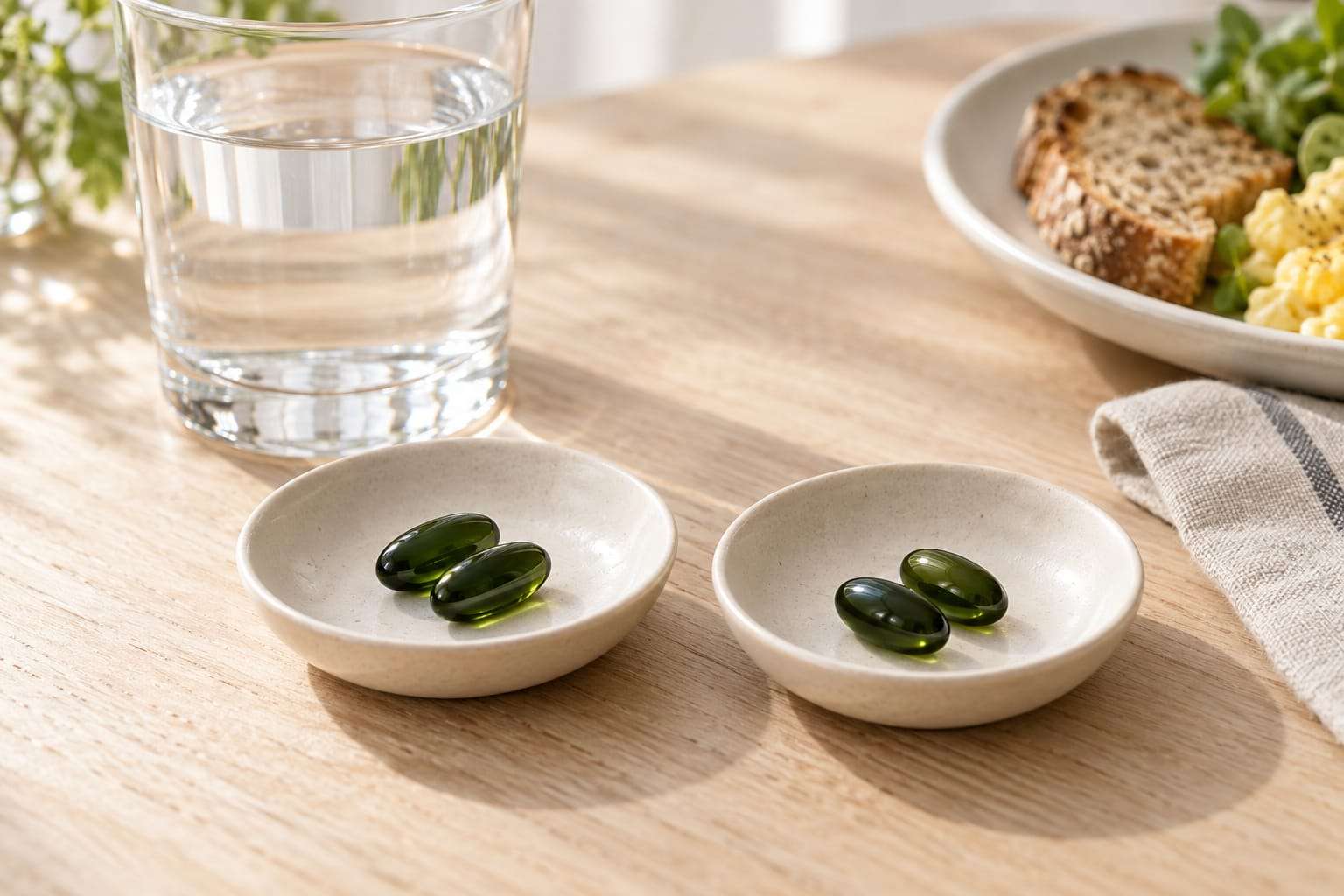
These describe what was tested, in the men chosen for that trial. They are not instructions for a different product. The number of capsules means something only together with what each capsule contains.
How long it takes
The comparison with placebo was made at 24 weeks. That is the trial's end point, not a measure of how quickly it acts, and not a promise of when a change shows. [1]
Side effects and safety
In the trial, one man in each group reported itching, and one man taking the capsule reported mild stomach discomfort. [1]
That is a short list, from a short trial of 76 men. A study this size can pick up common problems. It cannot rule out rare ones, and it says nothing about taking the capsule for years.
- Long-term use. Not studied in the trial.
- Use with medicines for hair loss. Not studied for this capsule. A blend containing pumpkin seed has been tested on top of medicines, and that result belongs to the blend.
- Other pumpkin seed oil products. Their safety at these amounts was not part of the trial.
If you stop
No study measured what happens to the hair after stopping, or whether the capsule has to be taken continuously to keep a result. We do not know.
Combining pumpkin seed oil with other options
Pumpkin seed oil is something to compare with the other options, not something to add to them by default. [1, 2, 3, 4, 5]
Pumpkin seed oil + saw palmetto
Not establishedBoth are capsules sold for the same purpose, and it is tempting to take them together. Nothing we reviewed tests the two on their own together. Blends that contain both, with other ingredients, have been studied, and those results belong to the whole formula.
Full saw palmetto profilePumpkin seed oil + rosemary
Not establishedOne is a capsule and the other a lotion, each with a single trial. Their separate results cannot be added up.
Full rosemary profilePumpkin seed oil + minoxidil or finasteride
Not establishedThe trial tested the capsule on its own against placebo. It did not test adding it to a medicine, and it did not compare it with one.
Full minoxidil profilePumpkin seed oil + other actives in the same capsule
Belongs to the blendSupplements that include pumpkin seed oil among several ingredients exist. A result for a formula is evidence for that formula, not for pumpkin seed oil.
For the bigger picture of what goes with what, see which options can be combined and which are alternatives.
What it costs
We did not record a price for pumpkin seed oil. Our price check only counts a product when it can be matched to the preparation that was studied, and we found no US or UK product with that match. A missing figure is not a low one.
If you compare products yourself, compare the amount of pumpkin seed oil per capsule, not the number of capsules in the bottle.
Keeping track
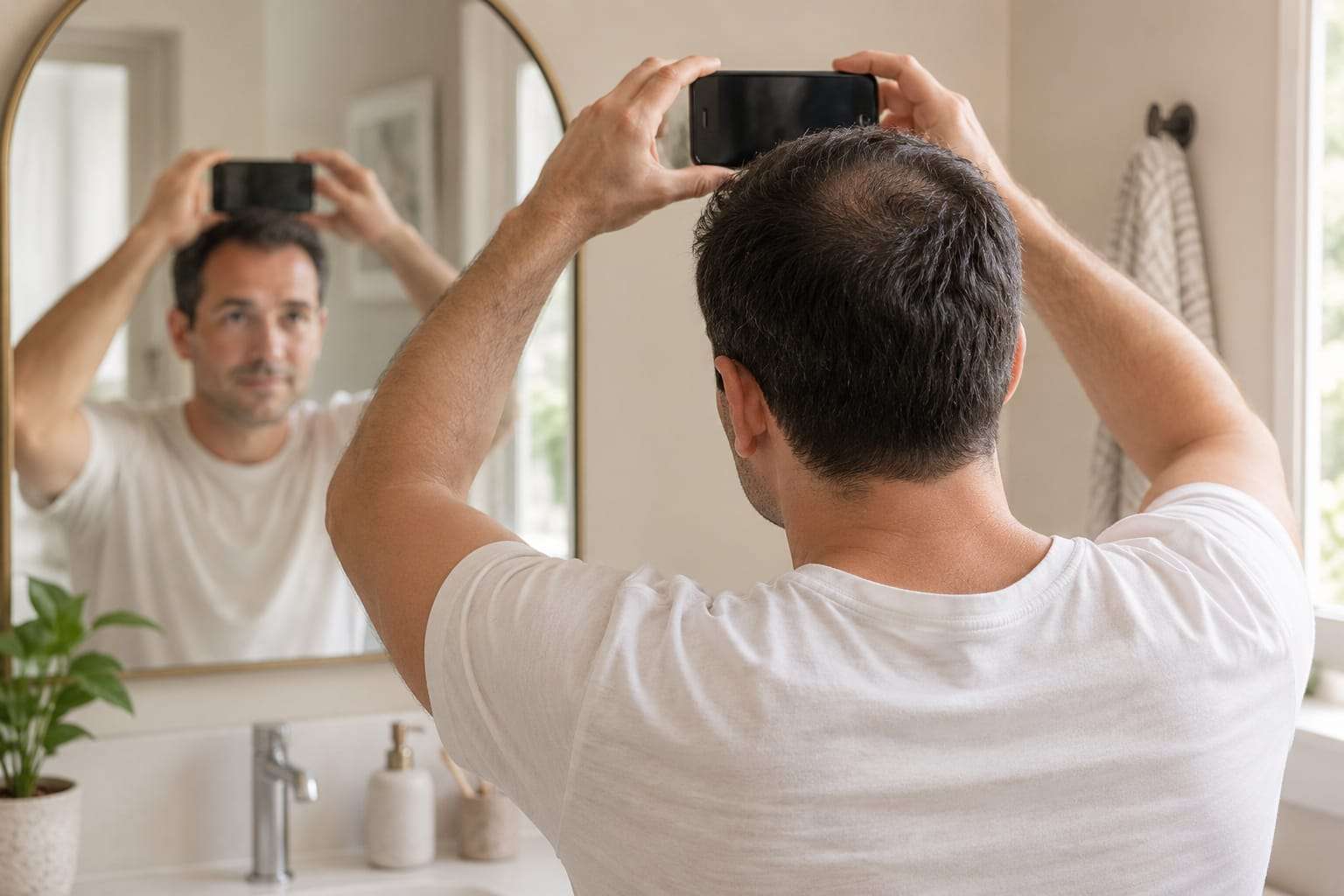
With an option whose effect, if there is one, is modest, your own records matter more than usual. Three habits help. They are organising suggestions of ours, not something tested in a trial:
- Photos. The same areas once a month, in the same light, at the same hair length and from the same angle.
- A record. The exact product, what the label says each capsule contains, the date you started and any days you missed.
- Anything you notice. Itching, stomach discomfort or anything else new, with the date.
Decide in advance when you will look back at the photos. The trial looked at 24 weeks. If nothing has changed by then, that is useful information, and a reason to reconsider the options with stronger evidence.