

If your hair is gradually thinning, the useful question is not how many supplements you can take. It is which options have evidence for the kind of hair loss you have, what benefit you might expect, and what their use involves.
This guide answers that for male pattern hair loss, before you choose a brand. It starts with what is going on and what can realistically be done, then ranks the ingredients worth comparing.
Hair loss in men, and what can be done about it
This guide is about male pattern hair loss, known medically as androgenetic alopecia: gradual thinning at the hairline or the crown. [1] It is not the only kind of hair loss. Sudden shedding, patchy loss, a sore or inflamed scalp and hair that simply breaks are different problems with different answers. The page on types of hair loss goes through them.
The encouraging part is that pattern hair loss has treatments tested in controlled trials. Topical minoxidil has shown regrowth against an inactive vehicle in men, and oral finasteride has placebo-controlled evidence both for keeping existing hair and for regrowing some of it. [2, 3] So for male pattern hair loss there are options with trial evidence behind them. None is guaranteed to work for a given person.
That improvement comes with conditions. It takes months rather than weeks, it differs from person to person, and it lasts only while treatment continues. [4, 3] No option in this guide restores a full head of hair on a schedule, and none is free of tradeoffs.
Why so many hair products promise more than they deliver
Shampoos, gummies, serums and “advanced formulas” can be sold with more confidence than their evidence supports. Four shortcuts are worth recognising:
- One studied preparation becomes every product with that name. A trial tests a specific saw palmetto extract or a specific rosemary lotion. That result does not transfer to any capsule or oil carrying the same ingredient name. [5, 6]
- A formula's result is credited to one ingredient. When a multi-ingredient product is studied, the finding belongs to that whole formula, not to whichever ingredient is printed largest on the label.
- A deficiency fix is sold to everyone. Correcting a documented lack of iron, zinc, vitamin D or biotin is a real question. It is not evidence that the same supplement regrows hair in someone who is not deficient. [7, 8, 9, 10]
- “Natural” is treated as “safe and effective”. Origin says nothing about either.

None of this means supplements are worthless. A few have real, if limited, human evidence, and they are covered below. It means the product name tells you very little. That is why this guide ranks ingredients rather than brands, and says plainly where the evidence stops.
The options at a glance
The options we compare for hair loss fall into five groups. They are not equally well supported, and they do not all aim at the same result.
The five kinds of options
- MedicinesTrials against placebo or another medicineMinoxidil, finasteride, dutasteride
- BotanicalsLimited, preparation-specific evidenceSaw palmetto, rosemary lotion, pumpkin seed oil
- Vitamins and mineralsRelevant when a deficiency is documentedBiotin, iron, zinc, vitamin D
- Procedures and devicesAssessed separatelyMicroneedling, light devices, PRP
- Hair care and coverageChanges how hair looks, not regrowthGentle hair-shaft care, cosmetic coverage
Groups follow the options we compare for hair. A group with stronger evidence is not automatically the right choice for you.
The rest of this guide concentrates on the first two groups: the six ingredients on our current shortlist for male pattern hair loss. It then explains where vitamins, procedures and devices fit. If you would rather be pointed to the relevant part, take the short Hair questionnaire.
First check that this guide fits your situation
This comparison covers adult male androgenetic alopecia, commonly called male pattern hair loss. It does not diagnose the cause of thinning or cover every form of hair loss. [1]
Which hair changes this guide covers
This guide covers
Gradual thinning at the hairline
Gradual thinning at the crown
Get an assessment first
Sudden or widespread shedding
Distinct patches
Painful or inflamed scalp
Heads are seen from above, forehead at the top. Illustrative only: a picture cannot identify the cause of hair loss.

Compare the main ingredients
For adult male pattern hair loss, topical minoxidil and oral finasteride are the core options to compare. Dutasteride also has meaningful clinical evidence, with a different benefit-risk and approval context. Botanicals such as saw palmetto, rosemary and pumpkin seed oil have more limited, preparation-specific evidence. They should not be presented as equivalent substitutes for established treatments. [2, 3, 11, 12, 6, 13]
We rank ingredients, not brands. Each ingredient has one entry. Its forms, such as a foam and a solution or a tablet and a spray, stay separate options inside that entry, because their evidence and risks are not interchangeable.
The position weighs eight things at once: how much benefit was shown and against what, how solid that evidence is, the risks, the time involved, cost, how demanding the routine is, what happens when you stop, and whether you can actually get it where you live. Effectiveness alone does not decide the order. Dutasteride produced a greater total hair-count gain than finasteride in one direct trial, yet sits one tier lower because of its body-wide risks, its long persistence in the body, the missing long-term comparison and country-specific approval. [11, 14, 15]
Positions are not scores. The six are numbered from 1 to 6. Minoxidil is listed first and finasteride second, but they share the top tier: our review does not establish a winner between them, and sharing a tier does not mean they are equally effective or equally safe. The minoxidil and finasteride comparison explains why we do not pick one. Saw palmetto, rosemary and pumpkin seed oil share the last tier, and the order among those three is editorial. We do not assign a score out of ten, because the studies measure different things in different ways.
- 1
Minoxidil
Core optionMedicineTopical solution or foam
Same tier as finasteride: our review does not pick a winner between them.
Topical evidence in men and clear product instructions make it a first option to consider. It asks for regular application, scalp tolerability matters, and the benefit lasts only while you keep using it.
- Effectiveness
- Benefit shown against an inactive vehicle
- Routine
- Twice-daily scalp application
- Time
- Review point set by each product's label
- Maintenance
- Benefit lasts only with continued use
- Access
- Labelled products available (US and UK checked)
- Main risk to weigh
- Scalp irritation; labels also carry systemic warnings
Evidence strength
Broader clinical support
Provisional: full appraisal incomplete
Read the details Full minoxidil profileHow we rateAll eight criteria, explained
- Effectiveness
- Benefit shown against an inactive vehicleThe 5% solution and the 5% foam each showed a benefit in men against the same product without minoxidil. The solution was studied for 48 weeks and the foam for 16, so these trials do not show which form is better, and they do not set an order against finasteride or dutasteride.
- Evidence strength
- Broader clinical supportA broader body of evidence on scalp use supports this place. It is a provisional description, not a formal certainty grade: our appraisal of the main trial reports was limited by access to the full text, the link between the foam trial and the foam label is provisional, and consistency across studies and publication bias have not been worked through.
- Risks and tolerability
- Scalp irritation; labels also carry systemic warningsFor the scalp forms, irritation and how well the scalp tolerates the product matter, and official labels also list body-wide warning symptoms. The tablets carry their own risks: more unwanted hair growth elsewhere, fluid retention and heart-related cautions. No form is risk-free.
- Time
- Review point set by each product's labelTrials measured results at 16 weeks for the foam and 48 weeks for the solution. The UK labels say to stop if there is no improvement after 16 weeks for the foam and one year for the solution. The US men's labels we checked say four months. These are product instructions, not a universal waiting period or a promised response.
- Cost
- Depends on country and formPrices were observed on 29 September 2026 in the US and the UK, for identified products and pack sizes. In the US examples topical minoxidil cost less than the finasteride subscription we looked at. In the UK examples generic finasteride tablets cost less. That does not make a global price order or show value for money.
- Routine
- Twice-daily scalp applicationThe men's labels we identified say to apply it to the scalp twice a day, with a measure and handling rules specific to each product. Choosing foam or solution can change how acceptable the routine feels. Fewer steps or a different texture have not been shown to change how well it works.
- Maintenance
- Benefit lasts only with continued useThe labels we checked say treatment has to continue to keep the benefit. The UK solution label says, on the basis of anecdotal reports, that the benefit is lost within three to four months of stopping. That is not a tested timeline for every form.
- Access
- Labelled products available (US and UK checked)The US and UK men's scalp products we identified have usable local labels, each with its own age limits and areas of the scalp. That supports their use as a reference in those two countries. It does not show approval worldwide, or approval of tablets for hair loss.
- 2
Finasteride
Core optionMedicineOral tablet
Same tier as minoxidil: our review does not pick a winner between them.
Evidence of benefit against placebo, kept with continued use, with a simple once-daily tablet. That is weighed against sexual and psychiatric warnings and the need for a prescription.
- Effectiveness
- Benefit shown against placebo
- Routine
- One tablet a day, on prescription
- Time
- Three months or more before benefit
- Maintenance
- Benefit lasts only with continued use
- Access
- Tablet approved (US and UK checked); spray varies
- Main risk to weigh
- Sexual and psychiatric warnings
Evidence strength
Broader clinical support
Provisional: full appraisal incomplete
Read the details Full finasteride profileHow we rateAll eight criteria, explained
- Effectiveness
- Benefit shown against placeboThe 1 mg tablet showed a benefit against placebo, as documented in the product label: 107 more hairs at one year in a 5.1 cm² area of scalp. That does not set an order against topical minoxidil, and it does not mean every form of finasteride works equally well.
- Evidence strength
- Broader clinical supportThe evidence for the tablet and its continuing use as an official reference support a core place. It is a provisional description: the original tablet trials have not had a completed appraisal of bias and certainty in our review, and our appraisal of the scalp spray does not cover them.
- Risks and tolerability
- Sexual and psychiatric warningsIn the first year, sexual side effects attributed to treatment were reported by 36 of 945 men on the tablet and 20 of 934 on placebo (3.8% against 2.1%). Persistent sexual symptoms and psychiatric warnings need a separate discussion: those percentages do not measure how often persistent problems occur.
- Time
- Three months or more before benefitThe US tablet label describes three months or more before a benefit, and the comparison cited here was made at one year. Follow the product's own guidance rather than one review date applied to every medicine.
- Cost
- Depends on country and providerDated price observations, for generic tablets in the UK and a subscription in the US, lead to different comparisons. No global price or value-for-money order is supported, and the price of an unidentified scalp blend says nothing about the price of finasteride alone.
- Routine
- One tablet a day, on prescriptionOne 1 mg tablet a day, with or without food. An easy routine does not remove the prescribing decision, the question of tolerability or the label's precautions on handling and reproduction.
- Maintenance
- Benefit lasts only with continued useContinued use keeps the benefit. The US label describes the effect reversing within 12 months of stopping. That does not support taking it on and off, or tapering.
- Access
- Tablet approved (US and UK checked); spray variesThe US and UK tablet labels we checked support use in adult men. The scalp spray is different: Spain has a specific labelled product, while the US regulator reports no approved topical finasteride product.
- 3
Dutasteride
Conditional alternativeMedicineOral capsule
One direct trial favoured it over finasteride on total hair count. That alone does not settle the overall balance: systemic effects, long persistence in the body, remaining uncertainty and country-specific approval matter.
- Effectiveness
- Greater total hair-count gain than finasteride in one trial
- Routine
- One capsule a day; long persistence matters
- Time
- Compared at 24 weeks
- Maintenance
- Data during use; not established after stopping
- Access
- Hair-loss approval varies by country
- Main risk to weigh
- Systemic warnings; stays in the body for a long time
Evidence strength
Limited support
One large direct trial; long-term data more selected
Read the details Full dutasteride profileHow we rateAll eight criteria, explained
- Effectiveness
- Greater total hair-count gain than finasteride in one trialThe 0.5 mg capsule beat finasteride 1 mg by an adjusted 33.0 hairs, counting all hairs in a circle 2.54 cm across, at 24 weeks (99.165% confidence interval 6.1 to 60.0). For the thicker terminal hairs alone it was not shown to be better. A conditional place is not a claim that it works less well.
- Evidence strength
- Limited supportA substantial direct randomised comparison supports that result, but this is not a combined certainty assessment of all dutasteride evidence. Our appraisal records concerns about how missing data were filled in, the timing of the baseline photos and the reporting history. The long-term evidence comes from a more selected group.
- Risks and tolerability
- Systemic warnings; stays in the body for a long timeSexual or breast-related events were reported by 19 of 184 men on dutasteride, 24 of 179 on finasteride and 12 of 181 on placebo in the 24-week trial. That does not prove equal safety, or that dutasteride is safer. Its long persistence in the body, uncertainty about semen measures and a precautionary warning about mood all weigh on the decision.
- Time
- Compared at 24 weeksThe deciding comparison was made at 24 weeks. That is not a promise of a faster response. The medicine stays detectable for months after stopping, which describes how the body clears it and is not evidence that regrowth is kept.
- Cost
- Only one local price observedOne dated UK price exists for the 0.5 mg capsule as used in the trial, with some additional fees not included. We found no comparable price for a scalp version of dutasteride alone, and no global cost order is established.
- Routine
- One capsule a day; long persistence mattersOne capsule a day, as in the direct trial, is simple to take, but the long persistence matters whenever treatment is reconsidered. A pilot study of taking it a few times a week does not establish equal benefit or lower harm, and it does not support a routine of finasteride plus dutasteride.
- Maintenance
- Data during use; not established after stoppingA selected five-year group describes benefit during continued use. It does not show that the benefit is kept after stopping. The medicine remaining in the blood is not a substitute for a study of what happens to hair.
- Access
- Hair-loss approval varies by countryThe US and UK labels we checked are for an enlarged prostate. Japan's label includes male pattern hair loss. The conditional place has to be reconsidered for the country concerned: it does not mean dutasteride works less well, or that it is off-label everywhere.
- 4
Saw palmetto
Limited evidenceBotanical supplementOral, identified extracts
Same tier as rosemary and pumpkin seed oil: the order among them is editorial.
Human studies of specific extracts show signals worth explaining, but extracts, populations and reporting differ. Results do not transfer to any capsule with the same name.
- Effectiveness
- Limited signal for specific preparations
- Routine
- Daily capsule; amount depends on the extract
- Time
- Study time points only
- Maintenance
- Not established after stopping
- Access
- Studied extract not matched to shop products
- Main risk to weigh
- Little hair-specific safety data
Evidence strength
Limited support
Small, extract-specific studies
Read the details Full saw palmetto profileHow we rateAll eight criteria, explained
- Effectiveness
- Limited signal for specific preparationsOne extract trial in 60 adults, men and women together, reported terminal hair counts over a front and a back area of the scalp combined changing by +18.6 with the extract and −10.1 with placebo at 180 days. That is not a men-only figure or a figure per square centimetre. A second small trial gives another signal, for a different extract. In an open-label study, photographs showed improvement at 24 months in 38% of men on saw palmetto and 68% on finasteride, which is not equivalence.
- Evidence strength
- Limited supportThe 90-day and 180-day reports describe one 60-person trial, registered after it had started. It included 30 men, and its subgroup headings conflict. The second trial is a single four-arm study, not separate confirmations for capsules and scalp use. The comparison with finasteride is known from its abstract, with the extract's standardisation unverified. Company sponsorship of one trial and the involvement of company employees in another are disclosed.
- Risks and tolerability
- Little hair-specific safety dataSmall hair trials cannot establish that the risk is close to zero, that hormones are unaffected, or that it is safe alongside finasteride or dutasteride. No product-related event in one trial is not proof of no events, or of long-term safety. A trial in men with urinary symptoms gives indirect evidence on tolerability. It does not show that the hair extracts are equivalent, or anything about fertility.
- Time
- Study time points onlyOne trial measured results up to 16 weeks, another up to 180 days, and the comparison with finasteride at 24 months. Different extracts, measurements and follow-up do not allow a fastest-response order or a guaranteed onset for one person.
- Cost
- No comparable price yetNo US or UK price has been matched to a studied preparation. Prices of the core medicines are context only: they cannot show that a botanical costs less, or what it costs per extra hair.
- Routine
- Daily capsule; amount depends on the extractThe two extract trials used a daily dose by mouth. That may suit some people, but the weight of a capsule is not the weight of the extract inside it, so a generic number of capsules cannot be given. No advantage over the medicines in keeping to the routine has been shown here.
- Maintenance
- Not established after stoppingThe reports assess use during treatment. They do not establish how long a benefit lasts after stopping, an on-and-off schedule, or the long-term safety of every extract.
- Access
- Studied extract not matched to shop productsFinding the ingredient name on a shelf does not confirm that the studied extracts are available in the US or UK, or that a product is equivalent to them in quality. The trial records do not establish a matched commercial product or a local authorisation as a hair treatment.
- 5
Rosemary
Limited evidenceBotanical topicalOne studied lotion
Same tier as saw palmetto and pumpkin seed oil: the order among them is editorial.
One specific lotion was compared with 2% minoxidil. That does not establish equivalence, effectiveness against 5% minoxidil, or anything about an essential oil or shampoo.
- Effectiveness
- Limited signal for specific preparations
- Routine
- Twice-daily lotion in the trial
- Time
- Study time points only
- Maintenance
- Not established after stopping
- Access
- Studied preparation not matched to shop products
- Main risk to weigh
- Tolerability versus minoxidil unresolved
Evidence strength
Limited support
One small trial, no placebo arm
Read the details Full rosemary profileHow we rateAll eight criteria, explained
- Effectiveness
- Limited signal for specific preparationsOne trial in 100 men compared a specific lotion with 2% minoxidil over six months. A simple difference between the average changes is not an adjusted result showing that one is better, and a difference that is not statistically significant cannot establish that they are equal. The lotion was not compared with 5% minoxidil.
- Evidence strength
- Limited supportOne single-blind trial against an active comparison in the evidence we selected, with no placebo group and unclear details of how the men were assigned to the groups. The area counted and the precision of the comparison are not specified well enough. Academic support and supply of the product by its manufacturer are disclosed.
- Risks and tolerability
- Tolerability versus minoxidil unresolvedItching increased in both groups. The paper's abstract and results disagree with the caption of one of its figures about which group had more itching, so a claim that rosemary is safer or causes no irritation is unsupported. No reliable figure for a lower risk can be given.
- Time
- Study time points onlyAn improvement in hair count was reported at six months. The trial does not show faster action than the core treatments, or a deadline for a personal response.
- Cost
- No comparable price yetNo US or UK price has been matched to a studied preparation. Prices of the core medicines are context only: they cannot show that a botanical costs less, or what it costs per extra hair.
- Routine
- Twice-daily lotion in the trialThe trial used a finished lotion twice a day, about 12 hours apart. That is an application routine, not one shown to be easier to keep up. The percentage of oil, the base and any conversion into drops remain unresolved.
- Maintenance
- Not established after stoppingThis six-month trial does not establish how long results last after stopping, or a tested maintenance schedule.
- Access
- Studied preparation not matched to shop productsThe current manufacturer page we found is a lead on identity, not proof that today's product matches the lot used in the trial: it lists several botanicals and mentions a later change of base. Access in the US or UK to a preparation equivalent to the trial's is unverified.
- 6
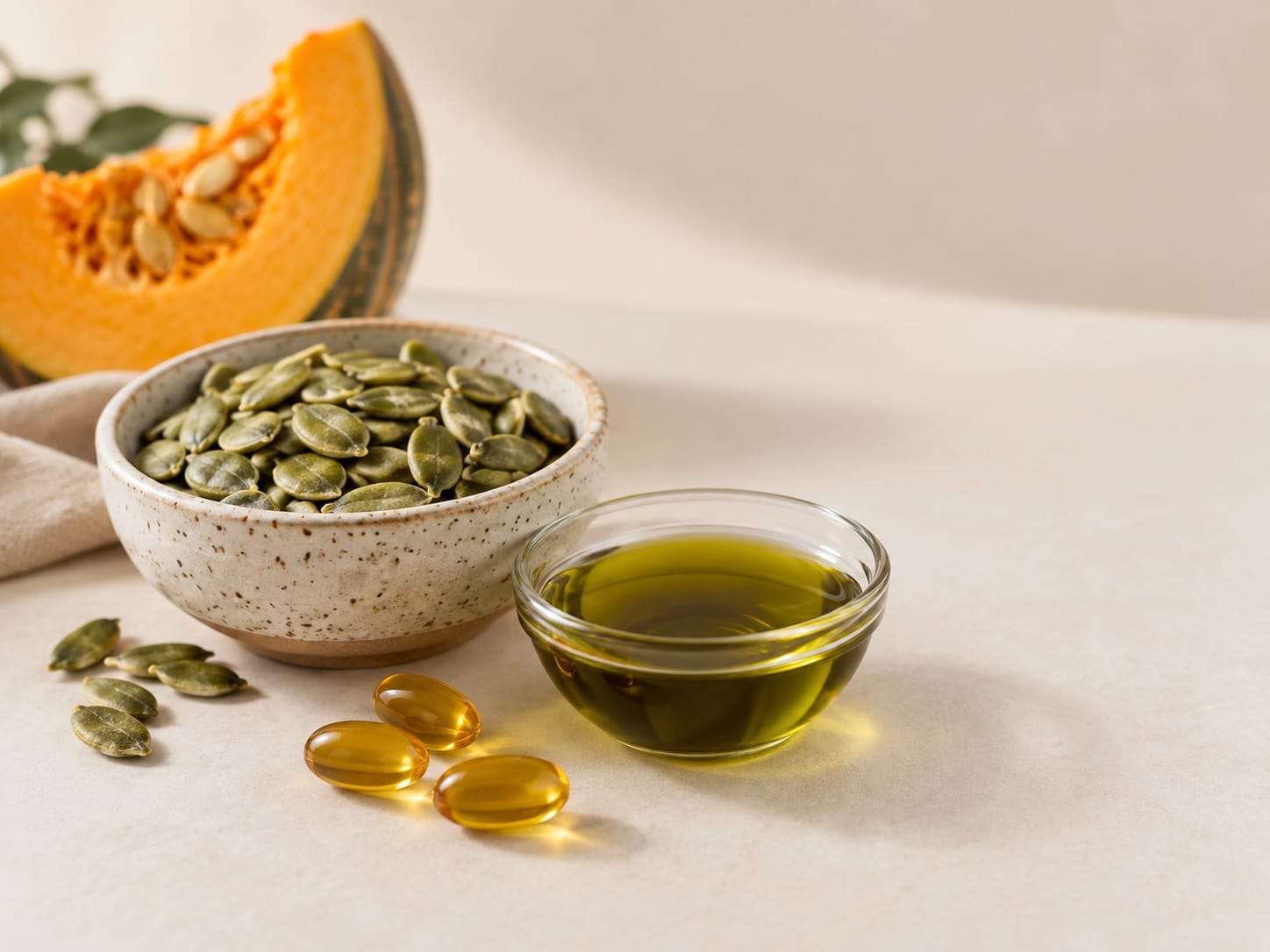
Pumpkin seed oil
Limited evidenceBotanical supplementOne studied oral preparation
Same tier as saw palmetto and rosemary: the order among them is editorial.
One oral preparation showed a signal against placebo in a small trial. Its full formula is not established, so the result cannot be transferred to generic products.
- Effectiveness
- Limited signal for specific preparations
- Routine
- Four capsules a day in the trial
- Time
- Study time points only
- Maintenance
- Not established after stopping
- Access
- Studied preparation not matched to shop products
- Main risk to weigh
- Safety data from one small trial
Evidence strength
Limited support
One small trial of one preparation
Read the details Full pumpkin seed oil profileHow we rateAll eight criteria, explained
- Effectiveness
- Limited signal for specific preparationsIn 76 men, the reported average changes at 24 weeks were +6.2 hairs with the preparation and +1.8 with placebo, per field viewed at 60 times magnification. The 4.4 difference is a subtraction, not a reported adjusted estimate, a figure per square centimetre or a whole-head gain. No head-to-head comparison with a core medicine is established here.
- Evidence strength
- Limited supportA small placebo-controlled trial with five and seven withdrawals, handled by carrying the last measurement forward. The hair count was a secondary measure, and the area counted is not described well enough to compare with other trials. The company that funded the trial also supplied the capsules and held the allocation codes. The authors declared no conflict of interest.
- Risks and tolerability
- Safety data from one small trialItching was reported by one participant in each group and abdominal discomfort by one participant taking the preparation. The data are too limited for a full estimate of how often side effects occur. A small, short trial cannot establish zero risk, or the safety of a different formula.
- Time
- Study time points onlyThe main comparison cited was made at 24 weeks. Nothing supports a faster response than the core medicines or the other botanicals.
- Cost
- No comparable price yetNo US or UK price has been matched to a studied preparation. Prices of the core medicines are context only: they cannot show that a botanical costs less, or what it costs per extra hair.
- Routine
- Four capsules a day in the trialThe trial used four capsules a day, split across two meals. The reported 100 mg of pumpkin seed oil per capsule is not the total weight of the capsule. This routine applies to that preparation, not to any pumpkin seed oil capsule or to cooking oil.
- Maintenance
- Not established after stoppingThe 24-week study does not establish an effect that lasts after stopping, or a long-term safety schedule.
- Access
- Studied preparation not matched to shop productsThe full composition of the trial lot was not reported, and we could not recover it. We found a Korean product registry entry with a matching name and date. It is only a lead on identity and does not connect the trial to a current US or UK product.
The tiers are an order of consideration. The numbers inside a tier are a reading order, not scores. Editorial ranking as of .
The same ranking is also on one page, where you can compare the six ingredients on one criterion at a time.
“Natural” describes origin, not a guarantee of safety, and the forms of one ingredient are not interchangeable. The table below shows which form each position is based on.
On the scalp or by mouth
| Ingredient | On the scalp | By mouth |
|---|---|---|
| Minoxidil | Solution or foam | Separate prescribing decision |
| Finasteride | Needs its own assessment | Daily tablet |
| Dutasteride | Investigational | Prescriber decision |
| Saw palmetto | Lotion, not assessed here | Defined extracts |
| Rosemary | One studied lotion | Not applicable |
| Pumpkin seed oil | Not applicable | One studied preparation |
Solid = the form our assessment is based on, coloured by its place in the ranking. Dashed = a separate form that needs its own assessment.
Minoxidil
Core optionMedicine · Assessment based on topical evidence
Topical minoxidil has evidence for regrowth in men with pattern hair loss. The practical choice is often between solution and foam: both have supporting evidence, but the studies reviewed here do not establish a universal efficacy winner between them. Oral minoxidil requires a separate benefit-risk discussion. [2, 16, 17]
Advantages
Trade-offs
- Regular application and continued treatment are needed to retain benefit.
- Scalp irritation and formulation ingredients can affect tolerability; topical labels also include systemic warnings. [4, 19]
- Oral use has distinct systemic concerns, including unwanted hair growth, swelling and cardiovascular cautions. It is not an automatic upgrade from topical use. [17, 20]
| Option | Practical difference | What the evidence does not establish |
|---|---|---|
| Topical solution | Measured liquid applied to the scalp; vehicle ingredients can matter for irritation | That it is more effective than foam for everyone |
| Topical foam | An alternative application format with its own quantity and handling instructions | That a different texture guarantees better results or tolerability |
| Oral minoxidil | A systemic medicine requiring an individual prescribing decision | That adding it to topical use automatically improves the benefit-risk balance |
Use and expectations: the reviewed male topical labels use twice-daily application, with product-specific quantities. Review windows also differ: the cited UK foam and solution labels have different no-improvement stopping rules. The two US men's labels we checked are for the top of the scalp, not a receding hairline, and the UK labels set age limits (18 to 65 for the solution, 18 to 49 for the foam). Follow the exact product rather than a universal internet timetable. [4, 16, 19, 21]
For trial numbers, label instructions, timelines, side effects and costs, see the full minoxidil profile. The page on minoxidil side effects covers the scalp forms and the tablets separately.
Finasteride
Core optionMedicine · Assessment based on oral evidence
Oral finasteride has placebo-controlled evidence for preserving hair and regrowth in male pattern loss. A daily tablet can make administration straightforward, but the decision also involves sexual and psychiatric risks. Topical formulations need their own assessment rather than inheriting either the oral benefits or an assumption of lower risk. [3, 22, 23]
Advantages
- Placebo-controlled evidence supports maintenance and regrowth. [3]
- The reviewed oral reference has a simple once-daily schedule.
- Direct evidence exists for combining oral finasteride with topical minoxidil, subject to the limits of those studies. The UK tablet label states that no data are available on using the two together. [18, 22]
| Question | What to know |
|---|---|
| What is the oral reference dose? | The reviewed product reference is 1 mg daily, with or without food; this is reference information, not a prescription for every reader. |
| When might benefit appear? | The US label describes three months or more before benefit; the main efficacy comparison was made at one year. |
| What do the sexual side-effect figures mean? | First-year treatment-attributed sexual events were reported in 3.8% on finasteride versus 2.1% on placebo in the cited label data. These figures do not quantify persistent symptoms. |
| Does topical mean no systemic risk? | No. The exact formulation, exposure, evidence and local warnings need a separate assessment. |
The percentages above describe specific trial/label observations, not a prediction of an individual person's risk or a comparison with topical treatment. [3, 25]
For trial numbers, label instructions, timelines, side effects and costs, see the full finasteride profile.
Dutasteride
Conditional alternativeMedicine · Assessment based on oral evidence
Dutasteride has meaningful comparative evidence. In a direct 24-week trial, oral dutasteride 0.5 mg produced a greater total hair-count increase than oral finasteride 1 mg. Its conditional position reflects the wider prescribing decision, including persistence in the body and local authorization. It does not mean the treatment is less effective. [11]
Advantages
- A direct randomized comparison supports greater improvement in the specified total hair-count outcome. [11]
- Once prescribed, oral administration can be straightforward.
| Question | What to know |
|---|---|
| What was studied directly? | Oral 0.5 mg compared with finasteride 1 mg at 24 weeks; these are trial regimens, not a universal prescription. |
| Was every hair outcome better? | No. Total hair-count superiority was demonstrated in the cited comparison; terminal-hair superiority was not. |
| Is it approved everywhere for hair loss? | No. The reviewed US/UK Avodart labels concern prostate enlargement; Japan's Zagallo label includes male pattern hair loss. |
| What about topical dutasteride? | It remains a separate investigational option in this comparison. |
| Does persistence mean the hair benefit lasts after stopping? | Drug persistence is not evidence of maintained regrowth after withdrawal. |
These distinctions are important when interpreting a claim that dutasteride is “stronger.” A particular efficacy result is only one part of the choice. [11, 14, 27, 15] The finasteride and dutasteride comparison goes through the trial, the side effects and where each is approved.
For trial numbers, where it is approved, how long it stays in the body, side effects and costs, see the full dutasteride profile.
Saw palmetto
Limited evidenceBotanical supplement · Extract-specific assessment
Advantages
Trade-offs
| Question | What to know |
|---|---|
| Is it equivalent to finasteride? | In the reviewed open-label comparison, 38% of men on saw palmetto and 68% on finasteride were rated as improved on photographs at 24 months. These are shares of men, not amounts of hair. Its limitations matter, but it does not support equivalence. |
| Is there one standard hair-loss dose? | Not across the reviewed extracts. Extract composition and quantity matter; capsule mass alone is insufficient. |
| How long were the studies? | Selected preparations were assessed over periods including 16 weeks, 180 days and 24 months. These are study timepoints, not promised onset times. |
| Does benefit persist after stopping? | The selected evidence does not establish a maintenance schedule or lasting benefit after withdrawal. |
The answers above describe the trials of each extract and the open-label comparison with finasteride. [5, 29, 12]
For the trials of each extract, the amounts they used, what is known about safety and how to read a label, see the full saw palmetto profile.
Rosemary
Limited evidenceBotanical topical · Assessment of a specific lotion
A particular rosemary lotion was compared with 2% minoxidil in a six-month trial involving 100 men. That is narrower evidence than the common claim that “rosemary works like minoxidil.” The trial did not compare it with 5% minoxidil or establish equivalence. [6]
Advantages
- A human comparative trial exists for a defined lotion protocol.
- It provides a topical botanical option to investigate rather than relying solely on anecdote.
Trade-offs
- The selected evidence is a single trial, with no placebo arm.
- The historical lotion cannot automatically be matched to a current oil, shampoo or homemade mixture.
- Itching was reported, and inconsistent reporting prevents a confident claim of better tolerability than minoxidil. [6]
| Question | What to know |
|---|---|
| How was the lotion used? | Twice daily, about 12 hours apart, in the cited protocol. This does not establish a recipe for generic essential oil. |
| When was improvement reported? | At six months; this does not prove faster action than established treatments. |
| Does a similar result mean equal effectiveness? | No. A nonsignificant difference is not an equivalence result. |
| Can the study tell me how many drops to mix? | No reliable general oil percentage, vehicle or drop conversion is established in the reviewed material. |
The answers above describe the one trial of the lotion. [6]
For what the trial measured, how the lotion was used and why it is not a recipe for essential oil, see the full rosemary profile.
Pumpkin seed oil
Limited evidenceBotanical supplement · Assessment of a specific oral preparation
A placebo-controlled trial in 76 men found a positive hair-count signal for a particular oral preparation over 24 weeks. Its complete historical composition is not established in our dossier, so the result cannot automatically be transferred to cooking oil or another capsule. [13]
Advantages
- A placebo-controlled study provides a positive signal in men with pattern hair loss.
- The published protocol gives a concrete reference for the preparation studied.
Trade-offs
- The evidence is small and does not establish superiority over a core medicine.
- Incomplete formula identity limits comparison with products sold today.
- Short follow-up and few adverse events cannot establish long-term safety or zero risk. The trial was commercially funded. [13]
| Question | What to know |
|---|---|
| What was the study routine? | Four capsules daily, divided across two meals, with a reported 100 mg of pumpkin seed oil per capsule. This describes that trial preparation, not a generic recommendation. |
| How long was it assessed? | 24 weeks; the result is not a guaranteed response deadline. |
| What adverse effects were reported? | Itching in one participant in each arm and abdominal discomfort in one product participant; these sparse observations cannot define the full risk profile. |
| Can I use culinary oil instead? | The trial does not establish equivalence with culinary oil or a different capsule formula. |
| What happens after stopping? | Lasting benefit and a maintenance schedule are not established by the selected study. |
The answers above describe the one trial of the preparation. [13]
For what the trial measured, what the 40% figure means and how the capsule was taken, see the full pumpkin seed oil profile.
What about vitamins and deficiencies
For the most frequently discussed single vitamin, read whether biotin helps hair growth. The broader vitamin guide keeps the other nutrients and deficiency questions together.
Correcting an assessed deficiency is a different question from treating male pattern hair loss. This guide does not provide a universal biotin, iron, zinc or vitamin D stack for everyone who notices thinning. A deficiency-related recommendation needs the relevant context; a questionnaire cannot establish a deficiency. [7, 8, 9, 10]
See how we label biotin, iron, zinc and vitamin D in the ingredient library before treating a vitamin list as a regrowth routine. The page on vitamins for hair loss takes those four nutrients one at a time.
Build a routine without adding everything
A useful routine makes the chosen treatment manageable. It does not require using all the ingredients in this article. The routines page sets out what can be combined and what is a choice between alternatives.
A topical route: after confirming that the product fits your situation, choose the specific minoxidil form and follow its local label. Foam and solution are alternatives within the same ingredient, not two ingredients to stack. [4, 16, 19]
A prescription route: discuss finasteride and its risks with a prescriber. Dutasteride is a possible alternative in the appropriate context; this guide does not recommend combining the two or give a switching schedule. [22, 23]
A combination route: oral finasteride plus topical minoxidil has direct combination evidence, with limits: we could read only the published summary of the main trial, and product labels keep their own rules on combined use. Results for that pairing cannot be transferred to every compounded topical mixture or an all-oral combination. A claim that two treatments have been used together is not proof of extra benefit or lower risk. [18, 26]
A botanical preference: compare the exact preparation and the weaker evidence before choosing it. Selecting “natural options” should change what you see, not inflate its evidence rating or turn several botanicals into a proven stack.
These are educational examples, not personalized prescriptions.
Where microneedling and devices fit
For the wider choice between procedures, see our comparison of microneedling, light devices and PRP. The individual guides explain low-level light therapy and PRP for hair loss in more detail.
Microneedling, light devices and other procedures belong in a separate discussion. They are not ingredients and do not appear in the ingredient comparison; you can find them listed separately in our ingredient library.
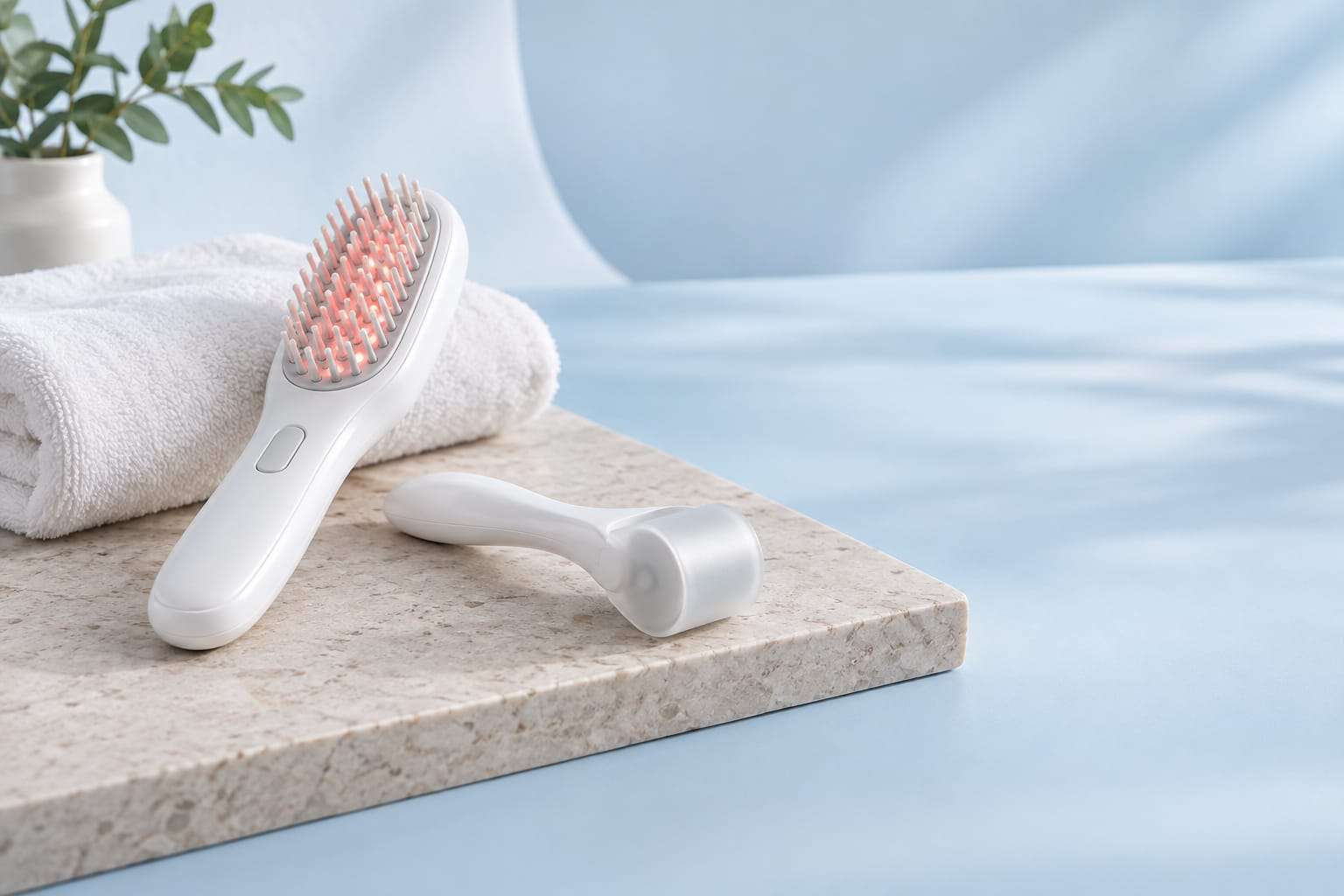
Evidence for particular microneedling protocols must be distinguished from common practice. [31] Popularity alone cannot justify an at-home needle depth, frequency or same-day application schedule.
How long should you give a treatment
Our practical guide to tracking hair changes explains how to keep comparable photographs and a record of what you used. For the tablet studies specifically, see finasteride results and timelines.
Think in months rather than days, while keeping the exact product's instructions in view. Studies use different follow-up periods, and labels can have different review or stopping rules. A six-month study does not mean everyone must wait six months before asking about an adverse effect, nor does an early lack of visible change prove failure. [4, 16, 3]
How long each option was studied
Minoxidil
Finasteride
Dutasteride
Saw palmetto
Rosemary
Pumpkin seed oil
Study and label time points, shown on a 24-month scale. They are not promised onset times, and your product's own label may set a different review point. [16, 2, 3, 11, 5, 29, 12, 6, 13]
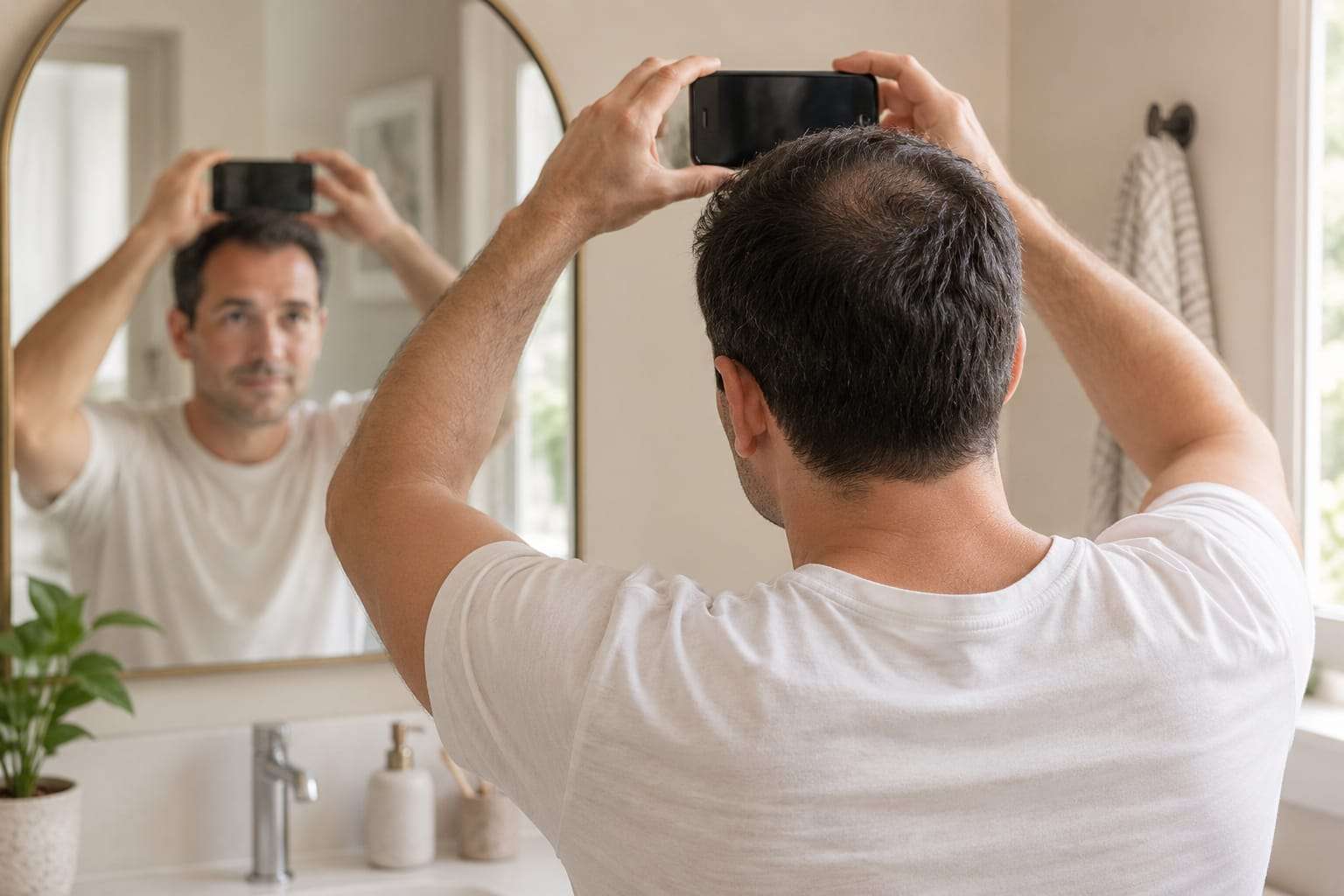
For your own record, use photographs with similar lighting, angle and hairstyle and record what you actually used. This is a practical tracking suggestion, not a validated diagnostic or treatment-response test.
How we compare the options
We assess effectiveness, evidence quality and applicability, risks, time, cost, routine burden, maintenance and access. These factors answer different questions. A treatment can have a favorable efficacy result and still require a more careful prescribing decision.
Prices and approvals depend on your country. Our language setting does not choose a market for you. Where a cost is not comparable or a formulation has not been matched to a study, we say so rather than invent a value. Brand selection and commercial links must not determine this comparison.
Read our evidence and comparison method or return to the ingredient comparison.
Find the relevant starting point
Take the Hair questionnaire to find the appropriate guide and filter the comparison. It does not diagnose hair loss, prescribe a dose or identify a guaranteed best treatment.
You can also browse every hair option we compare without answering questions.