Sleep
What helps you sleep better?
Start with what is keeping you awake. Explore routines, supplements, bedroom conditions and travel, with clear explanations of what the research can tell you.
Last updated

Choose your starting point
I want to sleep better
Understand the problem and build a manageable routine.
ExploreI am considering a supplement
Compare likely uses, benefits, risks and different formulations.
ExploreI wake too hot or too cold
Adjust your room, clothing and bedding for a more comfortable night.
ExploreLight or screens keep me up
Make daylight, evening lighting and phone habits work for your routine.
ExploreSleep tips have not been enough
Understand CBT-I for insomnia and how to ask for treatment.
ExploreI wonder whether dinner affects sleep
Separate late meals, hunger and reflux, and find a practical starting point.
ExploreI am crossing time zones
Learn how travel direction, light and timing fit together.
ExploreSleep guides
Sleep · Guide
How to sleep better: what actually helps?
Why can a full night still leave you tired? Understand your sleep stages, explore what may be disrupting your rest, and compare the habits, bedroom changes and supplements worth considering.
Sleep · Comparison
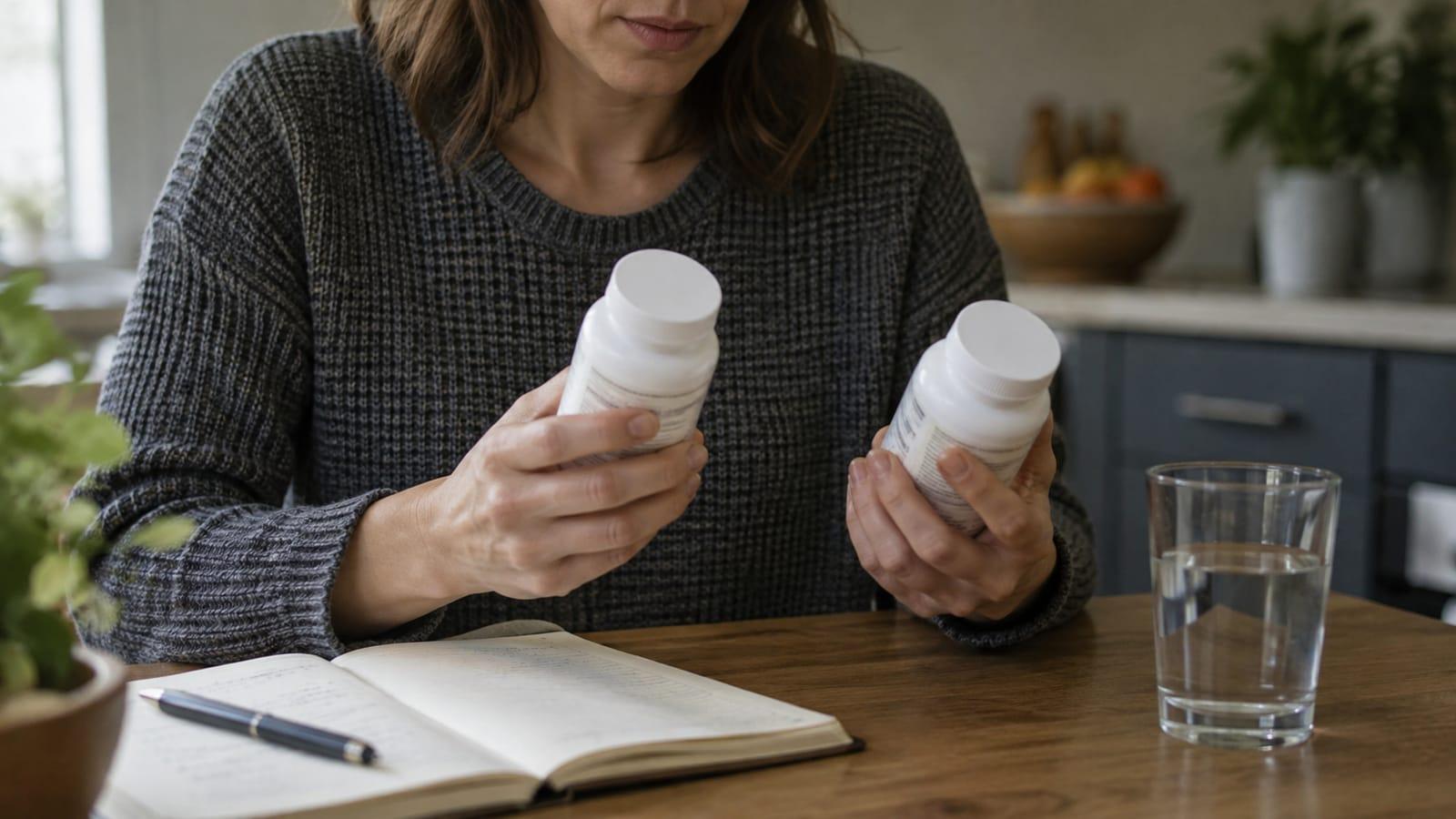
Sleep supplements: which ones actually help?
Melatonin, magnesium and herbal sleep blends make different promises. Compare what they may help with, what the studies leave uncertain, and the practical questions to ask before choosing a product.

Sleep · Guide
Eating before bed: how do meals and reflux affect sleep?
A late dinner, a small snack and heartburn are different bedtime situations. Learn how to adjust the evening meal, what sleep studies show and when digestive symptoms need attention.
Sleep · Guide
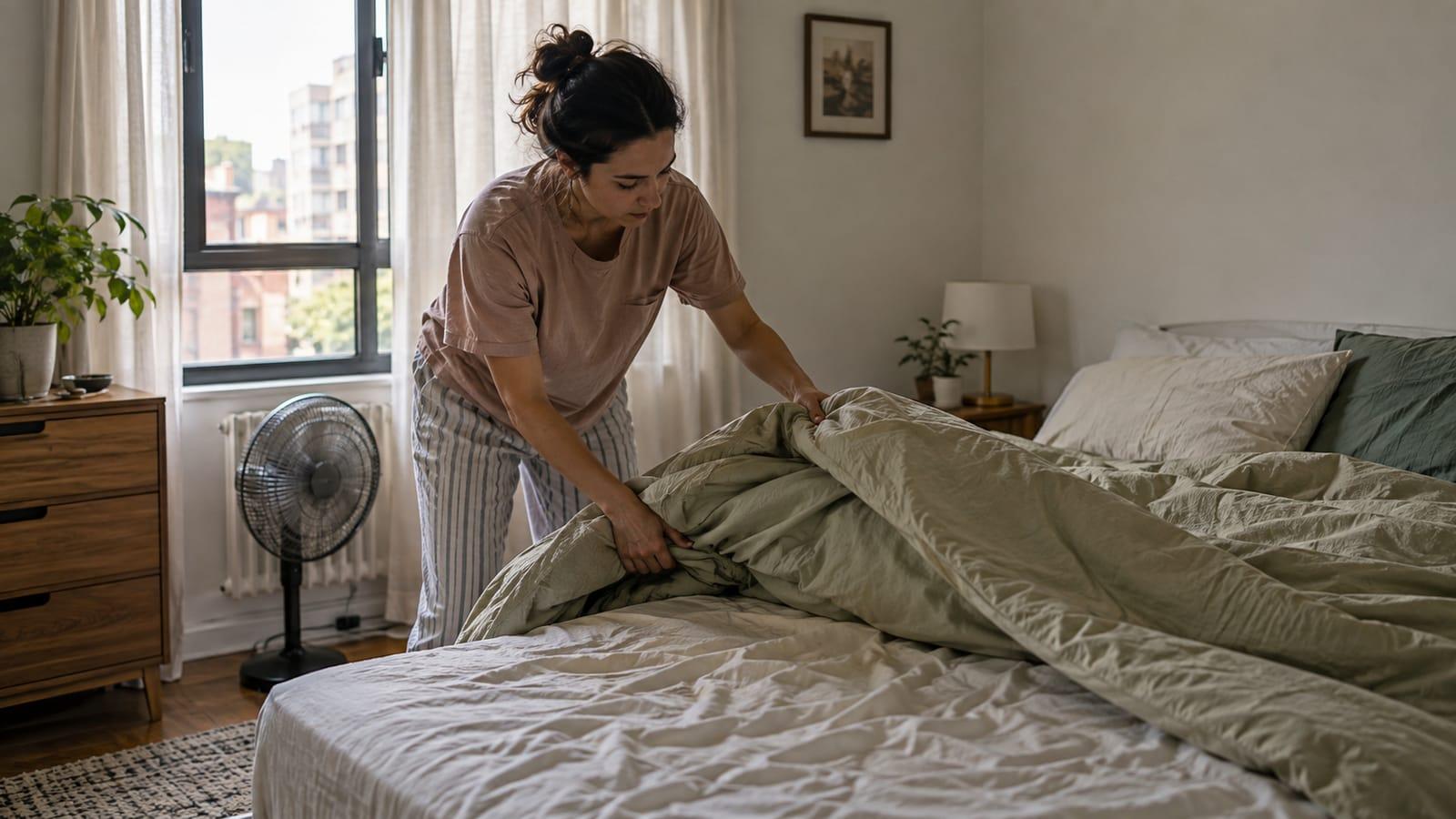
Bedroom temperature: what helps you sleep comfortably?
Your room, bedding and clothing all shape how warm you feel at night. Explore how to adjust them, what cooling products have shown and where a warm bath might fit.

Sleep · Guide
Light and screens: how do they affect sleep?
Light tells your body about the time of day, while screens also compete for your attention. Learn what to change about daylight, evening lighting, bedroom LEDs and screen habits, and what filters have shown.

Sleep · Travel guide
Jet lag: what helps your body clock adjust?
A time-zone journey can leave your body ready for sleep while the destination is waking up. Use a before, during and arrival checklist, understand light and melatonin timing, and learn what to take to a route-planning discussion.
Sleep · Treatment guide
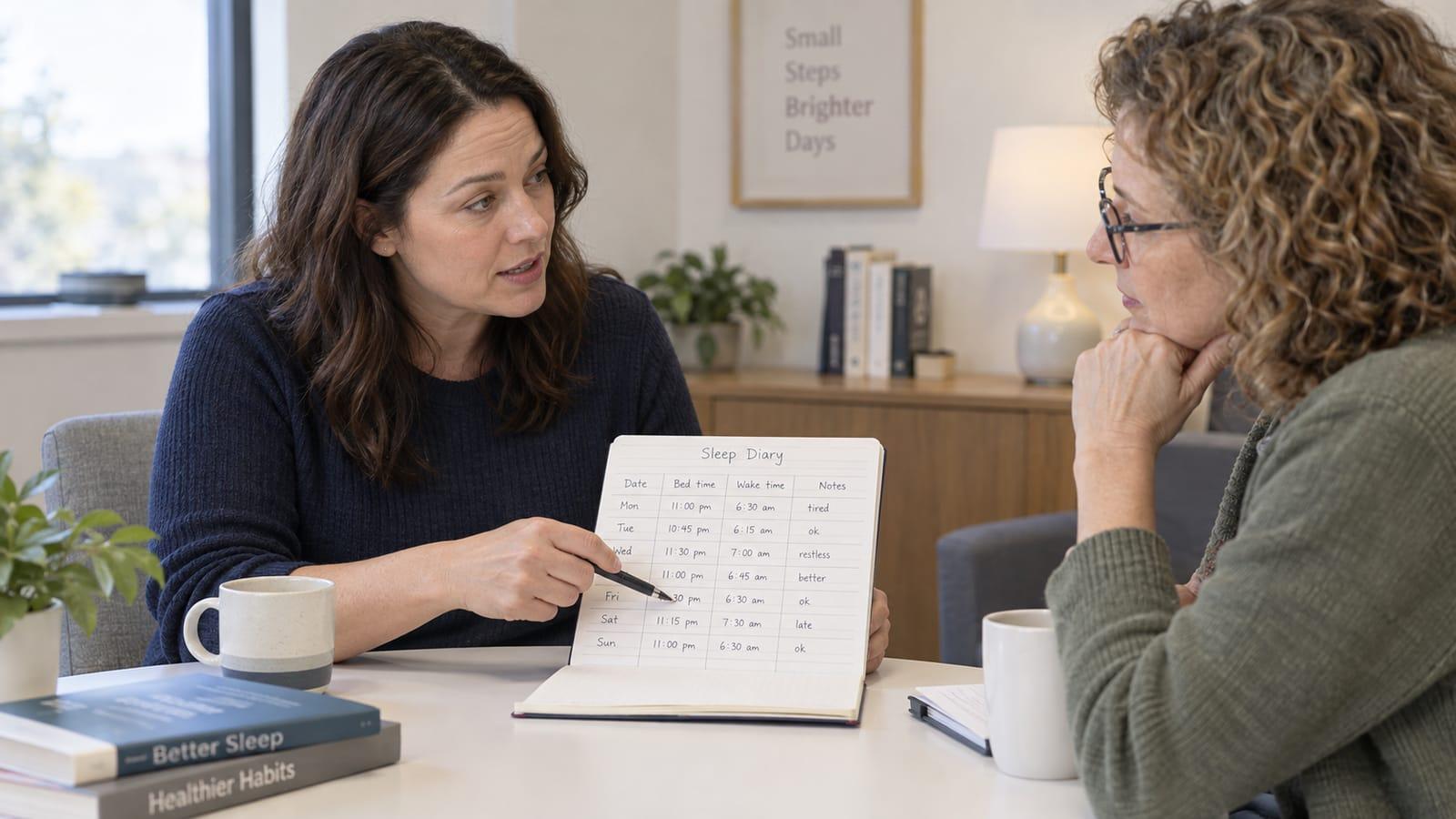
CBT-I for insomnia: what happens and how to get it
When good sleep habits are not enough, CBT-I offers structured treatment for insomnia. Understand the sessions, practical work and safety checks, then find out what to ask when looking for care.
Sleep · Comparison
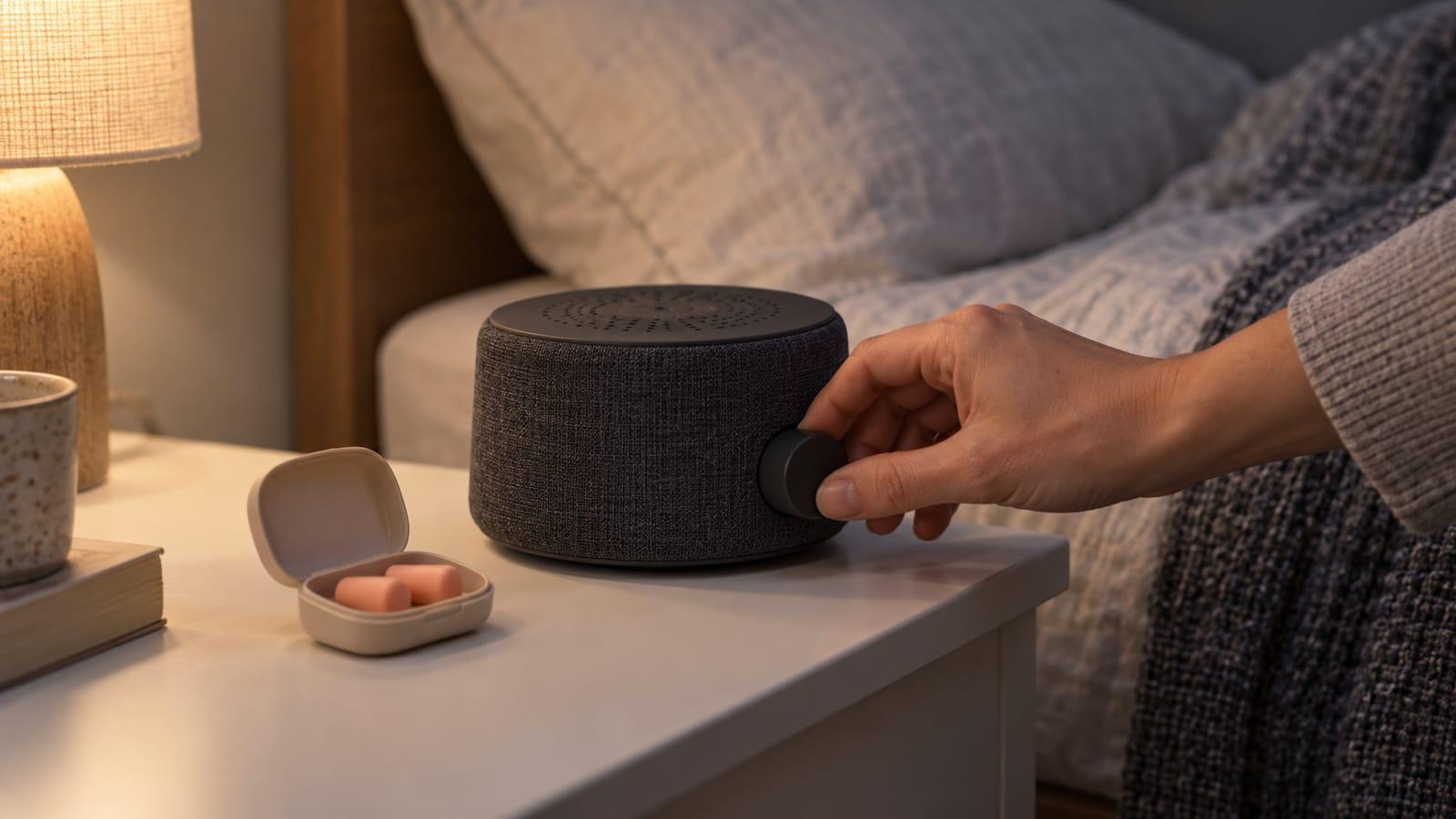
Noise and sleep: white, pink, brown noise or earplugs?
Background sound and earplugs change a noisy bedroom in different ways. Learn what the noise colours mean, which first change fits your room and what the sleep evidence can tell you.
Sleep · Comparison
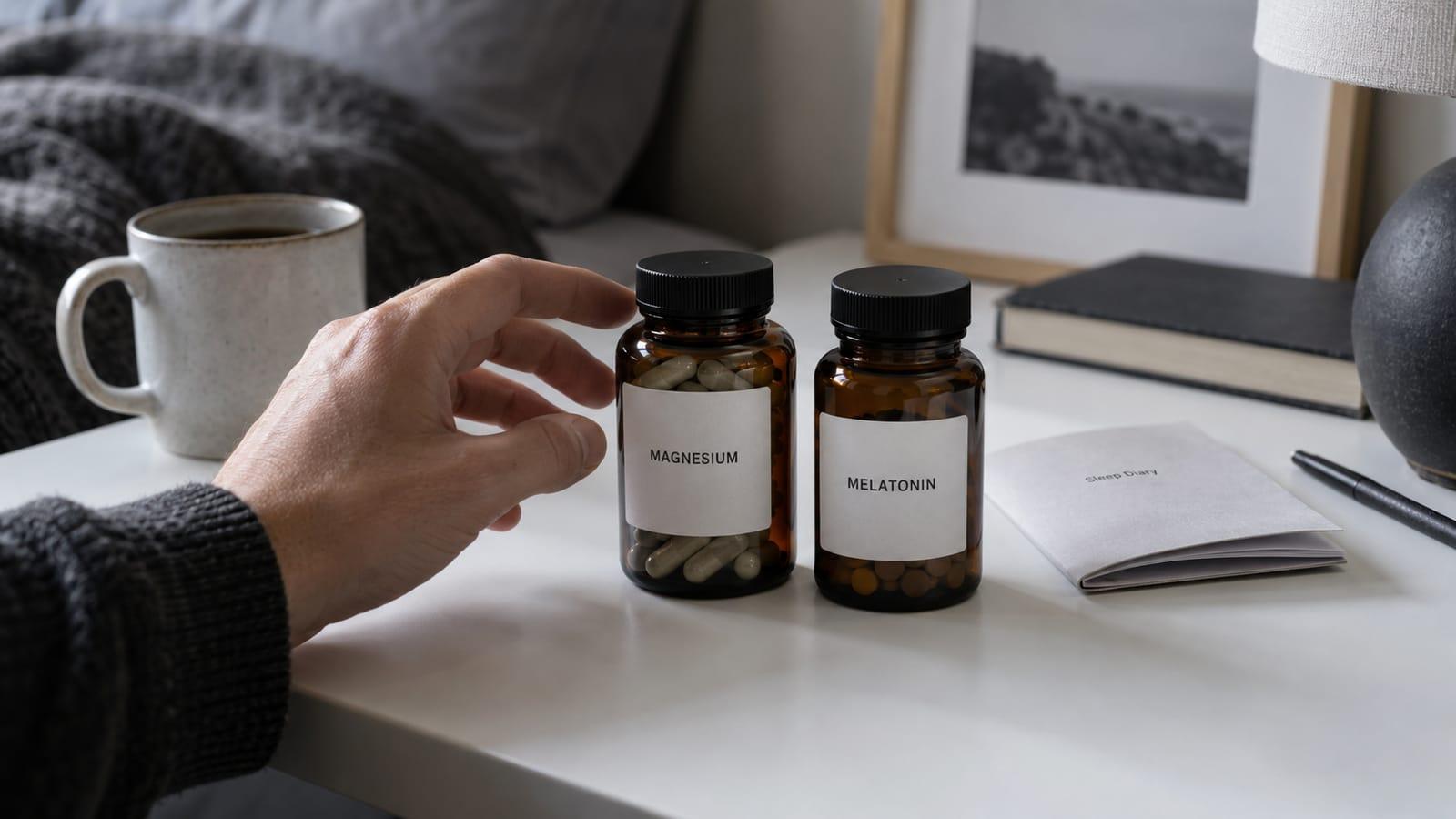
Magnesium vs melatonin for sleep: which fits the problem?
Magnesium and melatonin appear beside each other on sleep shelves, but they address different questions. Compare their uses, observed benefits and practical risks, including whether taking both adds anything.
Sleep · Tracker guide
Sleep trackers: what can a watch or ring tell you?
A sleep score can be reassuring or frustrating. Learn what a watch or ring estimates, why the chart can disagree with your night, and how to use the record without chasing a perfect number.
Explore an ingredient
Read the uses, formulations, evidence and safety details before considering a product. Start with the sleep supplement comparison to see how they differ.
Melatonin
Melatonin can influence when you feel ready for sleep, but different sleep problems need different answers. Explore its forms, the instructions on one European medicine, and the safety and product-quality checks that matter.
Read the profile
Magnesium
Magnesium labels can make a mineral sound like a specialist sleep treatment. This guide separates nutrition from insomnia evidence and explains the forms, elemental amounts, trial results and safety questions.
Read the profile
L-theanine
L-theanine is sold alone and in tea or sleep blends. Explore what the stand-alone research found, which sleep claims it cannot settle, and how product ingredients change the question.
Read the profile
Glycine
Glycine is sold as a powder or capsules for sleep. Learn what this amino acid is, what benefits the sleep studies suggest, and how to read the amount and safety claims on a product.
Read the profile
Ashwagandha
Ashwagandha sleep products use root, leaf or different extracts. Explore the modest sleep-onset result for one root extract and the health and medicine questions that can matter more than the label claim.
Read the profile
Valerian
Valerian tea, dried root and extracts share a name but not a proven effect. This guide explains what an insomnia trial found, which form it tested and what safety questions to check.
Read the profile