
Healing and hair growth follow different timescales
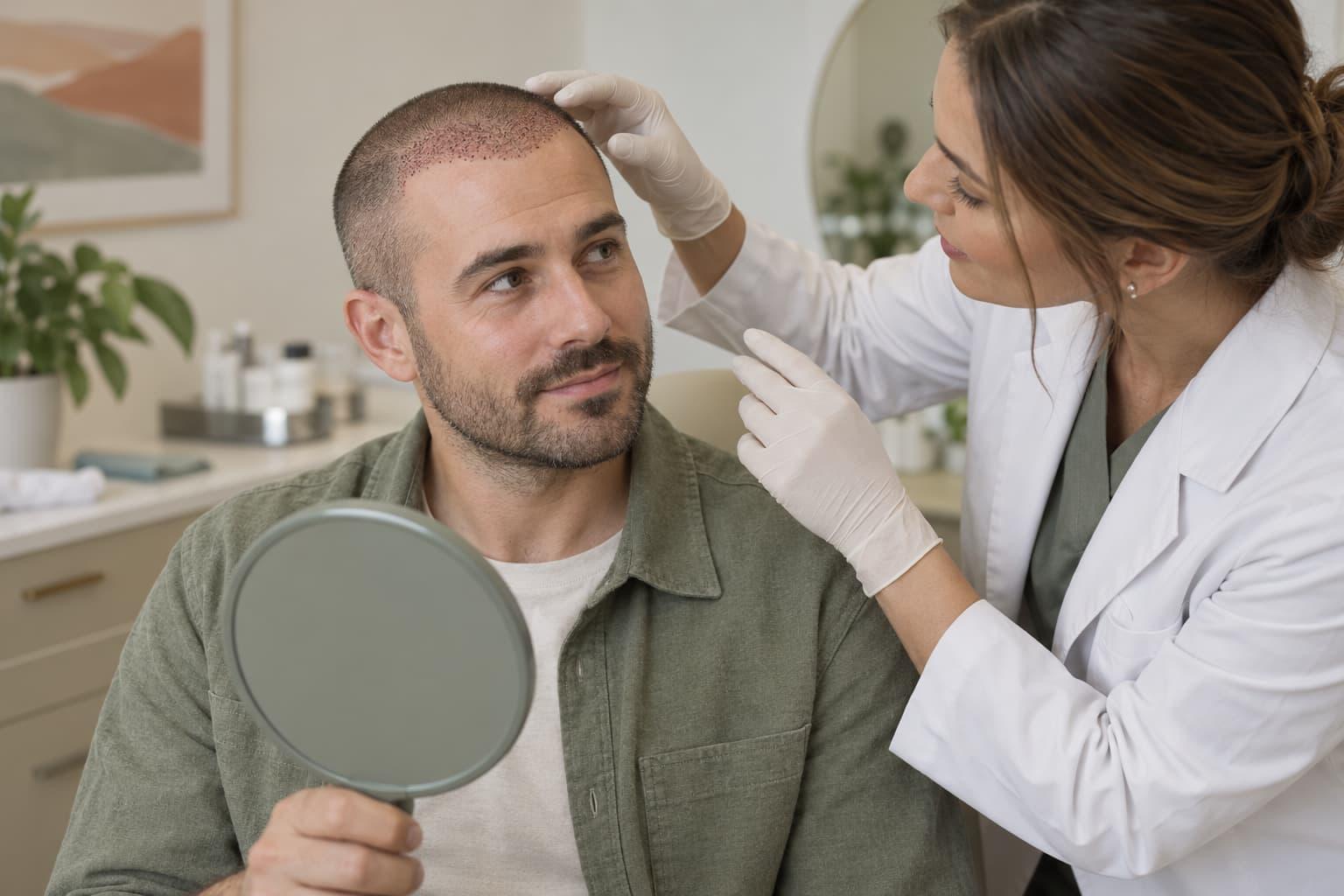
After a hair transplant, the scalp has to heal before the appearance of the new hair can be judged. Feeling ready for ordinary activities does not mean the hair has finished growing. Conversely, shedding during the first weeks does not, on its own, show that the operation has failed. The early recovery and the developing result need different expectations. [1, 2]
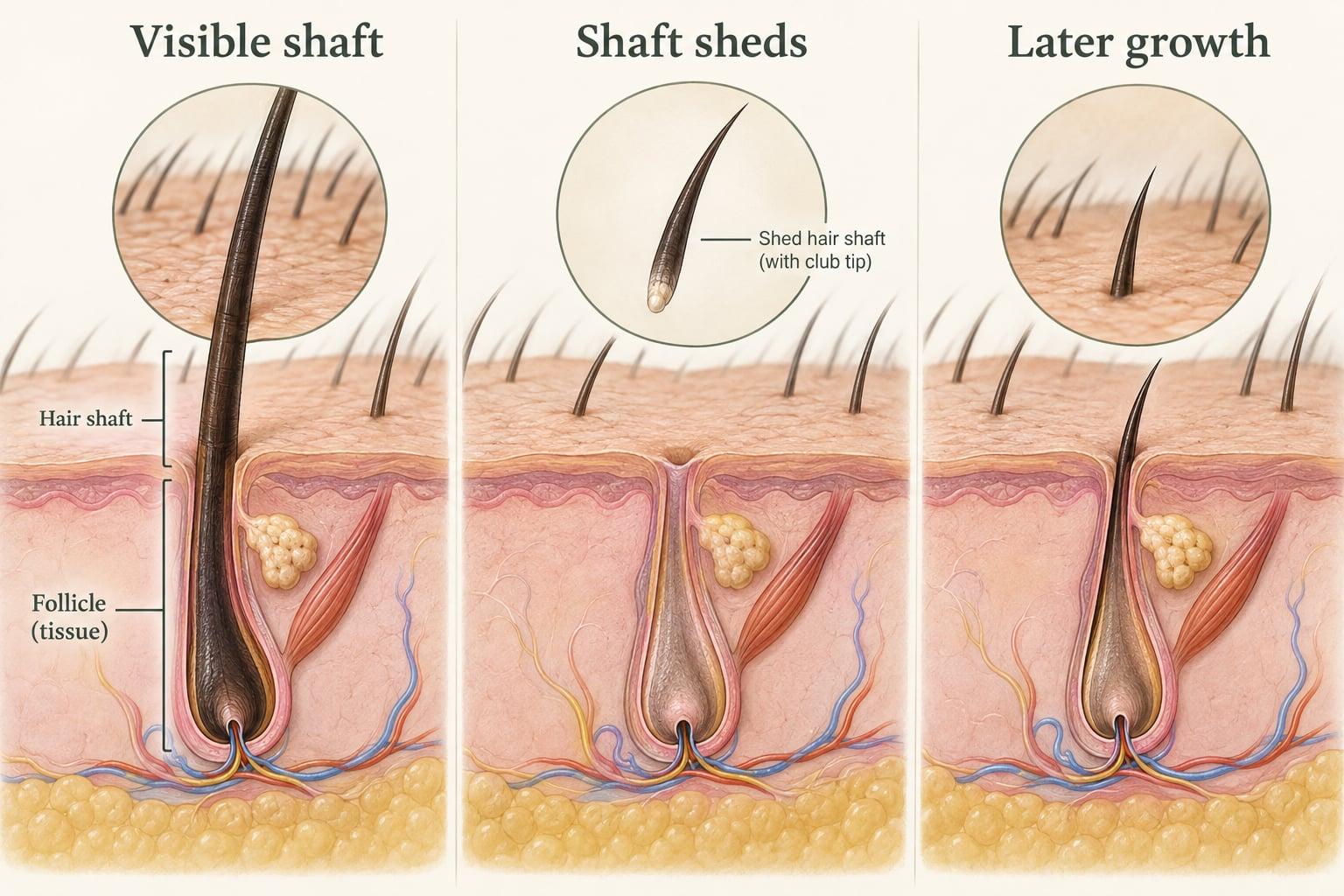
There are two areas to follow. The donor area is where follicles were collected, usually the back or sides of the scalp. The recipient area is where they were placed. A follicle is the structure within the skin that produces a hair; its visible hair shaft can fall out during the postoperative cycle. Native hair means hair that was already growing in the area before surgery. [1, 3, 4]
- Early recovery
- Skin healingWounds, discomfort and care of the donor and recipient areas.
- The next phase
- Shedding and growthChanges in visible hairs while a later result develops.
- Later assessment
- Coverage and appearanceHow the growing hair looks once it has had time to develop.
These phases overlap; they are not fixed deadlines for every patient. [1, 2, 3]
This guide concerns adult scalp transplantation, mainly for pattern hair loss. It explains common expectations and reasons to seek help. Your surgical team's written plan supplies the instructions for the operation you actually had. The hair transplant overview explains the procedure and donor limits before surgery.
A broad timeline, without a deadline for everyone
Recovery usually becomes visible long before the final cosmetic result. The NHS gives around one to two weeks away from work as a planning estimate, but returning to work and being ready for strenuous activity are different questions. The type of work, operation and recovery plan matter. [2]
What each recovery milestone actually means
Approximate windows from patient guidance. The rows overlap and do not predict an individual's rate of growth.
| What may be happening | What the review can answer | |
|---|---|---|
| Early days | Scalp discomfort, swelling and temporary scabs can accompany healing. NHS guidance. | Are the wounds and symptoms following the expected course? Severe or unexpected changes need contact now. |
| About 1 to 2 weeks | The NHS gives this as a broad time away from work. | Which duties can resume under the actual aftercare plan? Returning to work does not certify full healing or sporting fitness. |
| About 2 to 8 weeks | The AAD describes shedding of transplanted hairs. | Is the concern about shed shafts, native-hair shedding or a wound event? Visible loss alone cannot count failed grafts. |
| Around months 3 to 4 | BAPRAS describes growth beginning around this period; the AAD notes that month three can still look thinner. | Does progress fit the procedure? New hairs appearing and cosmetically useful coverage are different milestones. |
| About 6 to 9 months | The AAD says many patients see results here, sometimes at 12 months. | How is the appearance developing in comparable photographs? This does not mean everyone has reached final density. |
| About 10 to 18 months | The NHS describes fuller results; BAPRAS notes that hair quality can improve up to 18 months. | How does the more established result compare with the agreed coverage? The range is not a guarantee or a reason to delay a concern. |
Patient guidance, not a single trial's growth curve or a universal aftercare protocol. BAPRAS also notes that hair length and style affect when the cosmetic result can be judged. [1, 2, 3]
The NHS page used here still displayed its September 2023 review date when checked in October 2026. Its broad expectations are consistent with the distinction between healing and growth in the other organisations' guidance. Specific washing and activity dates should come from your team, rather than combining instructions from different websites.
Why hair can look thinner before it looks fuller
Early loss of visible transplanted hair is a recognised part of the postoperative course. The AAD specifically warns that the appearance may be thinner in the third month. This is why a photograph taken shortly after surgery cannot be compared with a mature result as though the two measure the same thing. [1]
A shed shaft is not the same thing as a displaced graft
A graft is the piece of tissue placed during surgery; the hair shaft is only its visible hair. Losing a shaft during the postoperative cycle is therefore a different event from that tissue being disturbed or displaced from the recipient site. The NHS emphasises protecting the grafts early after surgery. Later shedding does not remove the need for that protection. [1, 2, 3]
A loose hair, crust or phone photograph is not a dependable way to decide which event occurred. If the area has been knocked or disturbed, or there is bleeding or another unexpected change, describe what happened to the surgical team and ask how it should be assessed. Do not pull on hairs to test them. These are reasons to use the team's contact plan, not a visual test for diagnosing a lost graft. [2]
Native hair can shed as well
There can also be shedding of native hairs around the transplanted area. This is often called shock loss, or postoperative effluvium. It is a different question from the shedding of the shafts attached to newly transplanted follicles. A Japanese retrospective FUE study recorded temporary recipient shedding, while a Korean study specifically recorded shedding of pre-existing hair in women with pattern loss. [5, 4]
A transplanted hair shaft sheds
The visible hair falls out during the early postoperative course. That observation alone does not tell you whether the follicle will produce later growth.Native hair sheds near the recipient area
Hair that was already there can shed after surgery. This can add to the impression of thinning while the result develops.The donor area looks thinner
Temporary surrounding-hair shedding is possible, but graft removal, scarring and excessive harvesting are different explanations that need assessment.
These are distinctions to discuss at review, not a way to diagnose a photograph. [1, 6, 5, 4]
A physician Q&A from the International Alliance of Hair Restoration Surgeons describes native shock loss as often temporary, while cautioning that already weak, thinning hairs may not all return. This is expert guidance, not a measured probability of permanent loss. It would be misleading to promise complete recovery of every native hair or to label every postoperative shed as permanent damage. [7]
One study helps show why a universal shock-loss percentage is unhelpful. A retrospective Korean series included 195 women with female pattern hair loss, most treated with strip FUT and the remainder with FUE. Native recipient shedding was recorded in 45.1% and surrounding donor shedding in 6.7%. These were different, potentially overlapping outcomes in a selected group, not estimates for every man or woman having surgery. The authors reported no funding or conflicts. [4]
The study does not settle an individual's chance of shedding or prove which donor method causes less of it. Method choice depended partly on the centre and patient or doctor preference. Its value here is confirming that native-hair shedding deserves its own explanation. For the underlying condition in women, see female pattern hair loss.
Symptoms that deserve prompt contact
Severe pain or an unexpected symptom after a transplant is a reason to contact the treating clinic promptly. An ordinary growth timeline is not a reason to wait. The NHS also identifies bleeding, infection and reactions to anaesthetic among the possible surgical complications. [2]
| What you notice | Why it needs attention |
|---|---|
| Severe pain or a change outside the recovery instructions | The transplant guidance advises prompt clinic contact for severe or unexpected symptoms. |
| Wound skin that is hot, red, sore or swollen in a concerning way | These can be signs of a surgical-wound infection; an examination may be needed. |
| Pus or a wound opening | General surgical-wound guidance advises contacting a doctor straight away. |
| Fever or feeling generally unwell with a wound concern | This deserves prompt medical contact, rather than waiting for hair growth. |
The wound-sign examples come from Guy's and St Thomas' NHS guidance for surgical wounds generally. They do not diagnose infection in a transplanted scalp. Some early swelling and discomfort can be expected, so the course of symptoms and the instructions given for your operation matter. [2, 8]
Before leaving the clinic, a useful practical step is to confirm who handles concerns outside normal hours, how to reach them, and what to do if an examination is needed after travelling home. Keep that information with the discharge instructions. The clinic-selection guide makes this part of choosing the service, including care after travel. This is a planning suggestion, not a claim that a remote photograph can replace an examination.
Washing, scabs and returning to activities
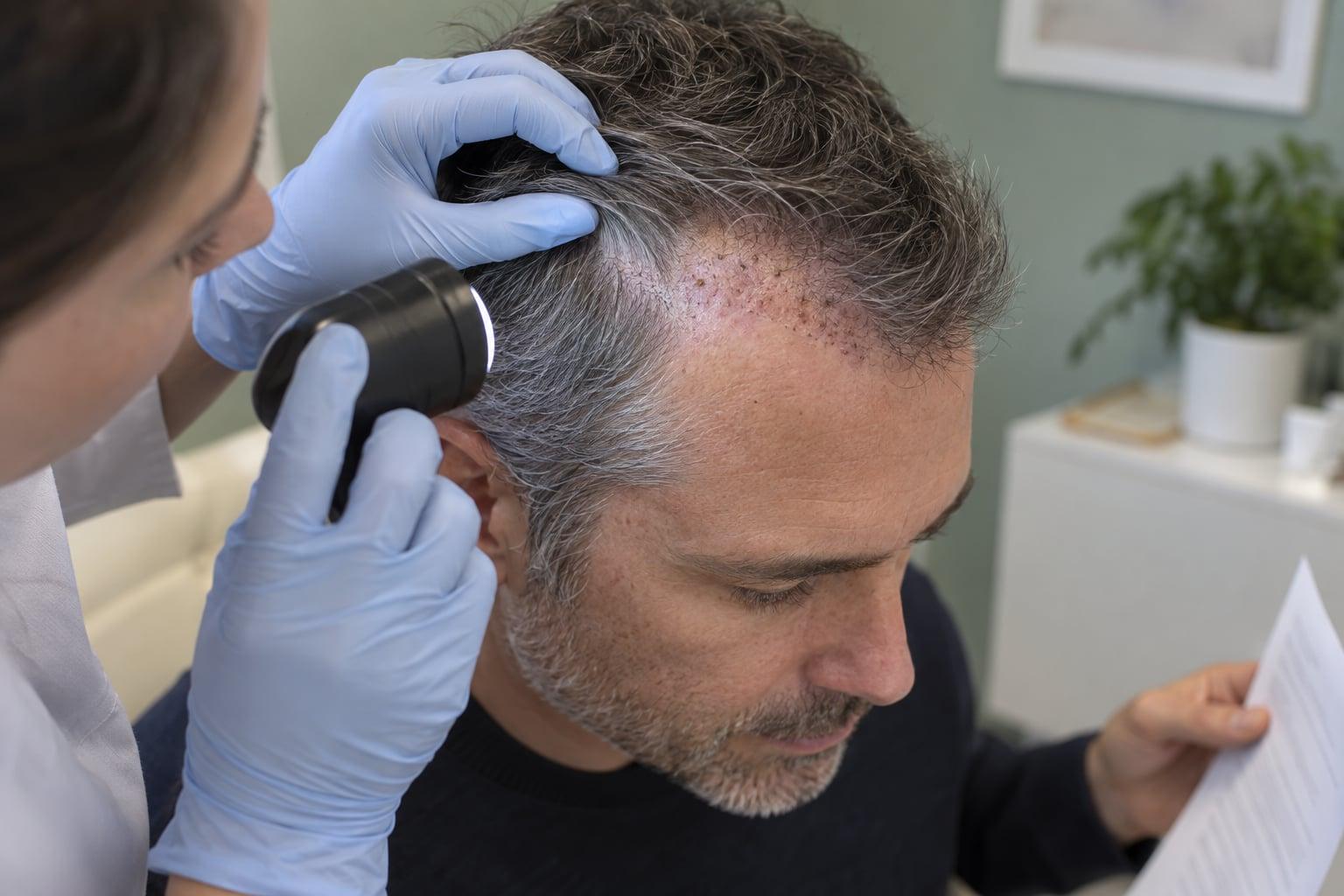
The operating team should explain how to protect and clean the grafted scalp. Public guidance contains example schedules, but those schedules are not a reason to override the instructions for your wounds. The NHS emphasises particular care in the early postoperative period, when grafts need protection. [2]
A useful aftercare plan answers concrete questions. “Be careful” alone is difficult to apply when deciding whether to wash, exercise, wear headwear or go back to a physical job. The list below is for clarifying the plan; it is not an alternative timetable.
Questions to resolve with the surgical team
- How should each area be washed, and when does that method change?
- What should happen to the crusts, and what should I avoid doing to them?
- Are there dressings or stitches needing a booked review or removal?
- When are my particular work duties, exercise and headwear appropriate?
- Are there instructions about sleep position, sun exposure, swimming or travel?
- Which symptoms require contact, and who is available after I return home?
Working at a desk, lifting at work, contact sport and taking a flight are not one interchangeable activity. Ask about the activities you actually expect to do and any required follow-up appointments. This page cannot turn a broad return-to-work estimate into medical clearance for all of them.
Crusts are a recognised early effect. They should be managed according to the care plan, not treated as a daily graft-survival count. If something looks unexpected or has been disturbed, ask the team to assess it rather than trying to identify a lost graft from an internet photograph. [2]
The donor area needs its own follow-up
FUE leaves small donor wounds where individual follicular units were removed. Strip FUT leaves a sutured wound after a strip of scalp was collected. Both leave scars, even when those scars are concealed by surrounding hair. The FUE, FUT and DHI comparison explains how collection differs from placement. [3]
ISHRS guidance distinguishes temporary donor effluvium from excessive removal and damage. It describes donor effluvium as usually settling over several months, while overharvesting can leave persistent visible thinning. Hair moved to the recipient area is part of the donor supply that has been used. Temporary shedding and removal of follicles should therefore not be treated as the same event. [6]
An assessment can consider where thinning appeared, how the scalp is healing and what was removed during the procedure. A patch at the back of the head cannot be classified confidently as harmless shock loss simply because surgery was recent. Persistent concerns belong in follow-up, with the original operative details available. [6]
Medicines and hair products during recovery
Treatment for ongoing pattern hair loss and care of surgical wounds have different purposes. A transplant can move follicles while native hair continues to thin, which is why medicines may be discussed as part of longer-term maintenance. That does not make every medicine suitable for every patient or tell you when it belongs on a healing scalp. [1]
The minoxidil profile and finasteride profile explain their general hair-loss evidence. Their product instructions are not substitutes for a surgical plan. A study that used a medicine before and after transplantation also does not supply everyone's stopping or restart date. The relevant transplant finasteride trial measured surrounding hair in men, rather than proving that every graft depends on the drug. [9]
Adding products is not a way to certify that a transplant will succeed. The evidence for non-surgical PRP or red-light therapy answers different questions from whether an extra purchase improves surgical graft survival. Ask what outcome a proposed postoperative addition is meant to improve and which evidence supports that exact use.
Keep a record that helps the review
A dated sequence is more useful than trying to judge growth from memory. Our practical suggestion is to keep the clinic's review dates, the instructions received and a consistent set of photographs together. The hair-growth tracking guide gives a simple setup without pretending that phone images count surviving grafts.
A recovery record to take to the review
Copy the fields you need into a note. This is an organising aid, not a symptom score or diagnostic checklist.
| What to record | What it helps clarify | |
|---|---|---|
| Operation | Date, collection method, areas treated and clinic contact. | Which procedure and healing areas are being discussed? |
| Instructions | The written plan and any later changes, with the clinician's name and date. | Which washing, activity or product instruction applies now? |
| A new concern | When it began, donor or recipient location, what changed and any preceding event. | Does the team need to assess a symptom or wound event before the planned visit? |
| Photographs | Date and scalp view; note changed lighting, haircut, styling or wet hair. | Are the images comparable enough to discuss appearance? |
| Products and advice | Actual products used, agreed changes, who gave advice and what happened afterwards. | Is the history clear without guessing which product caused a change? |
| Next review | Date, purpose, contact route and the main question you want answered. | Is this a healing check, a symptom assessment or a later growth review? |
Seek advice for a concerning symptom when it occurs. Completing the record should not delay contact.
Where practical, repeat the same views, lighting, hair condition and length, and note a haircut or product change. Keep symptoms and contact with the team in a separate note so a reassuring-looking photo does not obscure a problem. These are organising suggestions; the surgeon decides whether photographs, an examination or other assessment are needed.
The early healing check and the later cosmetic review have different jobs. One addresses wounds and symptoms; the other considers growth, design and the intended coverage. Keeping both appointments in view avoids treating every early change as a final result, or every concern as something that must wait many months. [1, 2, 3]
For example, “recipient area, new soreness since yesterday, aftercare followed as written, next routine review in two weeks” is a clearer history than “my transplant has failed”. It leaves diagnosis to the clinician while identifying the question that needs attention. This is an example of recording the history, not an instruction to wait for the booked visit.
When the question becomes the result
If healing is progressing but coverage remains uncertain, the next discussion is about growth and the surgical plan. Early shedding is not an automatic diagnosis of failure. Equally, reaching a particular month cannot guarantee adequate growth. Ongoing poor growth deserves assessment before deciding that another operation is the answer. [1, 10]
What counts as a successful hair transplant?How to interpret coverage, satisfaction and graft survival, what can change over the years and why a second session may be discussed.For a new decision about surgery, start with who can be a candidate. If the concern is a symptom now, use the surgical team's contact plan rather than waiting for a result review.